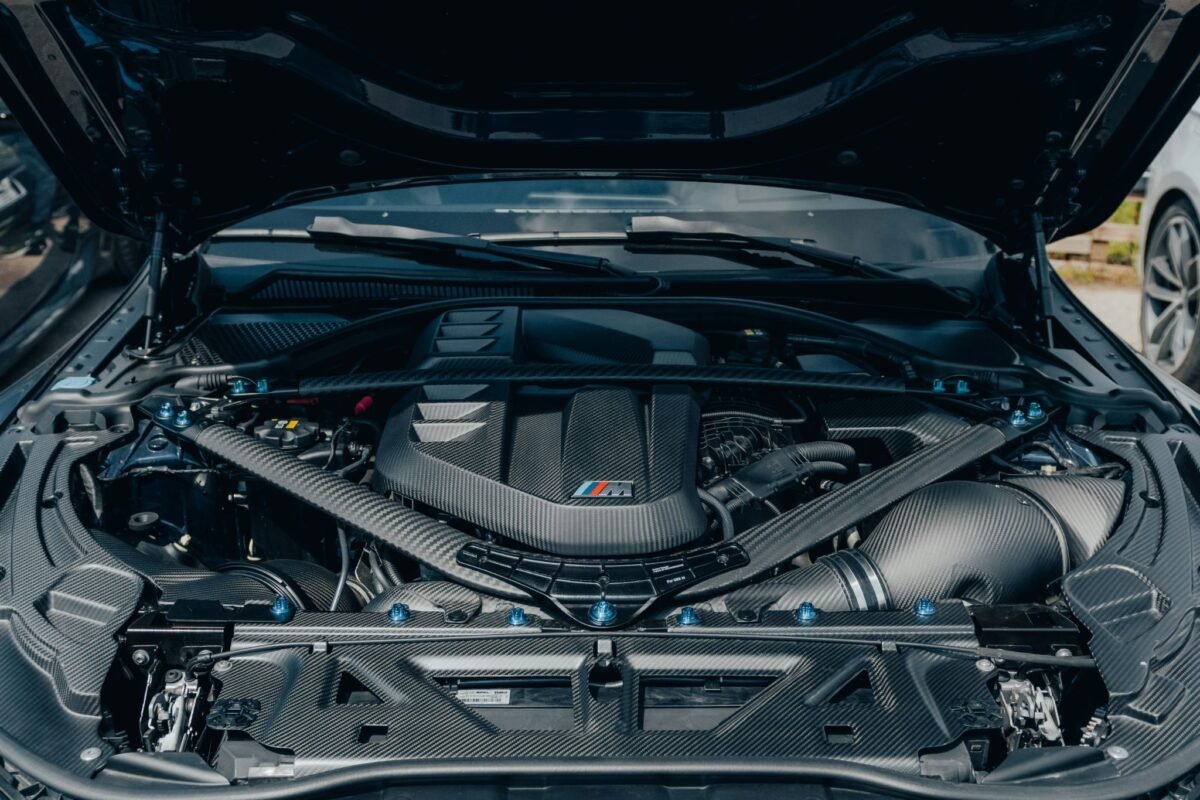
Buying used BMW motor parts can be a sensible way to repair an older BMW without paying new-dealer prices. But there is an important difference between finding a part that looks right and finding one that is actually correct for your car.
This matters particularly when buying major components such as engines, gearboxes, turbochargers, ECUs and other mechanical parts. Two BMWs can look almost identical while using different versions of a component. Engine code, model year, drivetrain, specification and even vehicle options can affect compatibility.
If you are buying from a BMW breaker, specialist supplier or online marketplace, a few checks before purchase can save you from an expensive mistake.
1. Start With the VIN, Not Just the BMW Model
The first mistake many buyers make is searching for a part using only the model name.
“BMW 320d engine” sounds specific, but it is not specific enough. A 320d can have different engine codes depending on the generation and production year. The same applies to other BMW models, including the 1-5 Series, X models and newer G-generation cars.
Your 17-digit Vehicle Identification Number (VIN) provides a much more reliable starting point. It identifies the exact vehicle specification and can be used to check the correct engine, transmission and component configuration.
If you are buying a replacement engine, the engine code is particularly important. If you are buying smaller components, the BMW part number can provide an even more precise match.
The basic rule is simple: identify the car first, then identify the part.
2. Check the BMW Part Number
Once you know what component you need, look for its BMW part number.
Many BMW components have identifying numbers stamped, cast or printed directly onto the part. However, the number visible on the component may not always represent the complete ordering number, and BMW parts can also be revised or superseded.
This is why simply finding a number on a used component is not enough.
A proper parts catalogue can help establish whether the number corresponds with your vehicle and whether BMW has replaced it with a newer part number.
For buyers unfamiliar with BMW’s numbering system, it is worth spending a few minutes checking the number before ordering. A small amount of research can prevent the frustration of receiving a component that physically looks similar but does not fit your vehicle.
3. For Engines, Match the Engine Code
When buying used BMW engine parts, engine code is one of the most important details to verify.
BMW has produced many closely related engines, sometimes with several variants of the same engine family. A good example is the N57 diesel engine, which has appeared in different versions and power outputs across several BMW models.
The same principle applies to petrol engines. The B58, B48, N55 and N52 families, for example, have been used across multiple models and generations, but that does not mean every engine from that family is automatically interchangeable.
Before buying a complete engine, confirm:
- Engine family and exact engine code.
- Vehicle generation.
- Production year.
- Power output where relevant.
- Transmission compatibility.
- Drivetrain configuration.
- Ancillary equipment.
- ECU and wiring requirements.
- Whether the supplied engine includes the required components.
A replacement engine should never be selected solely because the seller’s advert contains the same BMW model name as yours.
4. Ask About Mileage and Donor Vehicle History
Mileage is important, but it should never be considered in isolation. A 70,000-mile engine with poor maintenance history may be a worse purchase than a 120,000-mile engine that has been serviced properly throughout its life.
Ask the supplier where possible:
“What vehicle did the part come from?”
This can reveal useful information about the specification and how the component was used.
For engines, ask whether the donor vehicle was involved in an accident, whether the engine was running before dismantling and if there are any known issues with the unit.
For diesel engines, previous usage can be particularly relevant. A BMW diesel used primarily for long motorway journeys has a very different operating history from one that spent most of its life making short urban trips.
The same principle applies to petrol engines. Regular oil changes, correct servicing and attention to cooling-system problems can make a major difference to the useful life of an engine.
5. Don’t Judge a Used Engine by Its Exterior
A clean engine is not necessarily a good engine. Likewise, an engine covered in normal grime is not automatically a bad one.
When buying a used BMW engine, the important questions are what has been checked, how the unit was obtained and what warranty is provided.
If possible, look for evidence of testing. A professional BMW dismantler should be able to provide information about the donor vehicle and the condition of the engine.
Ask about issues such as:
- Oil leaks;
- Coolant leaks;
- Unusual noises;
- Compression;
- Turbocharger condition;
- Injector condition;
- Cooling-system components;
- Timing-chain condition where applicable;
- Electronic components and sensors;
- Visible damage to the block or cylinder head.
You may not be able to inspect every internal component before purchase. That makes the supplier’s testing process and warranty particularly important.
6. Check What Is Actually Included
One used-engine advert can mean something very different from another. For example, one supplier may sell a bare engine, while another may include the turbocharger, injectors, intake components, wiring or other ancillaries. This can make apparently cheaper engines considerably more expensive once the missing components have been sourced.
Before paying, establish exactly what you are receiving.
Ask whether the price includes:
- Complete engine;
- Turbocharger;
- Injectors;
- Intake and exhaust components;
- Alternator;
- Starter motor;
- Sensors;
- Engine wiring;
- ECU;
- Ancillary brackets;
- Other required components.
The answer will depend on the engine and supplier, so do not assume that “complete engine” has the same meaning everywhere.
7. Check Compatibility Before Buying BMW Motor Parts
Compatibility is not only about whether the part physically bolts into the car. Modern BMWs rely heavily on electronics and communication between control units. An engine replacement, for example, may require the correct ECU configuration, wiring and associated components.
Even apparently minor differences can matter. This is why sending the supplier your VIN can be more useful than simply sending the model and year. A reputable BMW parts specialist should be willing to check compatibility rather than simply telling you that a part “should fit”.
For buyers searching for BMW motor parts, this is one of the most important questions to ask before placing an order: “Can you check the part against my exact vehicle?”
8. Be Careful With Aftermarket and Cross-Compatible Parts
Used genuine BMW parts are not the only option. Depending on the component, buyers may also consider OEM or aftermarket alternatives. The important point is understanding what you are buying. An aftermarket component may be perfectly suitable, but quality and compatibility can vary between manufacturers. A cheap component that does not communicate correctly with the vehicle, fit properly or last as expected can quickly become a false economy. For critical components, check the manufacturer, specification, part number and compatibility rather than choosing solely on price. For used genuine BMW components, the same rule applies: the fact that a part carries a BMW number does not remove the need to verify compatibility.
9. Ask About the Warranty
A warranty is particularly valuable when buying an expensive used component. BMW car engine parts can cost hundreds or thousands of pounds, so understand the warranty conditions before purchasing.
Check:
- How long the warranty lasts;
- What components are covered;
- Whether labour is covered;
- Whether installation must be carried out by a qualified garage;
- Whether the warranty applies if the part is modified;
- What evidence is required if a fault occurs;
- Whether the warranty covers the replacement part or the entire repair.
Do not wait until something goes wrong to read the terms. A clear warranty policy is one of the easiest ways to distinguish a professional parts supplier from an anonymous marketplace seller.
10. Compare the Total Cost, Not Just the Part Price
A £2,000 engine is not necessarily cheaper than a £2,300 engine. The cheaper unit may have higher mileage, fewer ancillaries, no meaningful warranty or require additional components before installation. Installation costs also need to be considered. For a replacement engine, the final bill may include:
- Used engine + delivery + labour + fluids + seals + ancillary parts + programming/coding where required.
This is particularly important with modern BMWs because additional components or electronic work may be necessary during installation.
A slightly more expensive engine from a specialist supplier can therefore be the better financial decision if it has lower mileage, better documentation and a stronger warranty.
11. Consider the Engine’s Known Weak Points
Every BMW engine has its own characteristics. Some engines have particularly well-known issues that should be considered when buying a replacement or used vehicle. For example, the N47 diesel is widely associated with timing-chain problems, while the N57 has its own potential concerns involving timing chains, bearings, EGR systems and other components. Petrol engines also have their own typical maintenance points. On the other hand, engines such as the M57, N52 and B58 are frequently regarded as strong choices when properly maintained. The important lesson is not to label an entire engine family as “good” or “bad”. Condition, mileage, servicing and previous use can be just as important as the engine code itself. A well-maintained engine with a known history is generally a more attractive proposition than an unknown unit simply because it has a popular engine code.
12. Buy From a Supplier That Understands BMWs
Used BMW parts are available from thousands of sellers, but specialist knowledge matters. A general vehicle breaker may have the part you need without necessarily knowing the differences between BMW engine variants, model generations or electronic configurations. A BMW-focused dismantler is more likely to understand these differences and help identify the correct component.
This can be particularly valuable when buying an engine or other expensive mechanical component. Instead of simply asking, “Do you have a BMW 320d engine?”, give the supplier your VIN, registration details, engine code and any available part numbers. The more precise the information you provide, the easier it is to find the correct part.
A Simple Checklist Before Buying a Used BMW Part
Before completing the purchase, ask yourself:
- Do I have the correct VIN and vehicle specification?
- Have I confirmed the exact BMW part number?
- If it is an engine, have I checked the engine code?
- Do I know the mileage and donor vehicle?
- Has the component been tested?
- What exactly is included in the price?
- Is it genuine, OEM or aftermarket?
- Has compatibility been confirmed?
- What warranty is provided?
- Have I calculated the total installation cost?
If you can answer all ten questions confidently, you have already eliminated many of the common risks associated with buying used BMW parts.
Final Thoughts
Buying used BMW engine parts can save a considerable amount of money, particularly when a complete replacement component is available from a reputable specialist. But the cheapest listing is rarely the only thing worth considering. The right approach is to identify your exact BMW, verify the part number or engine code, investigate the component’s history, understand what is included and check the warranty before paying.
For larger components such as engines, compatibility should always be confirmed against the vehicle rather than assumed from the model name alone. Most importantly, remember that condition and provenance matter. A properly identified, tested and warranted used BMW component can be a practical alternative to buying new, while the wrong part can turn a seemingly cheap repair into a much more expensive one.
When in doubt, give a specialist your VIN and ask them to verify the part before ordering. A few minutes spent checking compatibility can save days of frustration later.