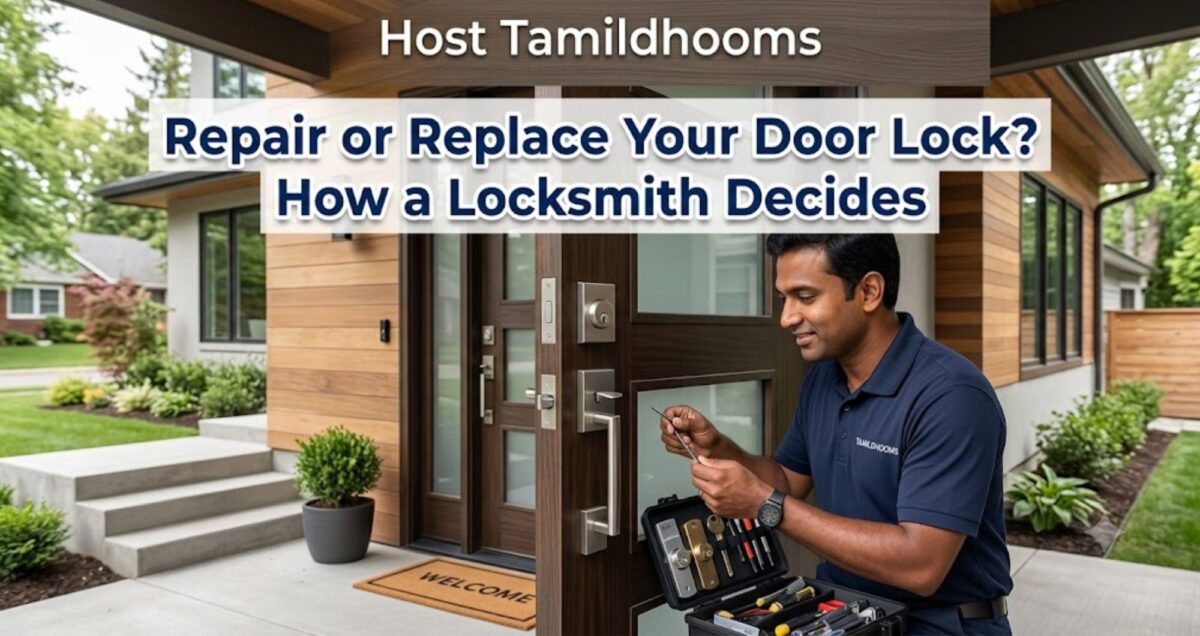
A faulty lock does not automatically need replacing. The best locksmiths diagnose before selling parts because a door lock is part of a larger system: the key, cylinder, latch, bolt, handle, keep, hinges and frame all affect how it feels. Repair is sometimes the smarter choice; replacement is essential when security or reliability has gone.
For a practical benchmark, experts at LocksmithLocal recommend starting with the least destructive and most secure route, not the most expensive one. Their locksmiths or Door Lock are trained through MPL Locksmith Training to City & Guilds accredited and NCFE-certified standards, and that mix of formal training, DBS checks and clear pricing is the sort of professional standard readers should look for.
Why this service matters
Not every lock fault means a new lock, and not every new lock is an upgrade. A stiff key can be a worn cylinder, a misaligned door, a damaged key, a dry mechanism or a door that has dropped on its hinges. The value of a locksmith is in separating the simple repair from the real security risk.
Lock changes are most sensible when keys are unaccounted for, the lock is worn beyond reliable repair, the existing hardware fails to meet an insurance requirement, or a recent break-in has compromised the door. Repairs are often enough when the lock is fundamentally sound but badly aligned, dry, loose or affected by a failing handle or gearbox.
A locksmith decides by asking what has actually failed. If the door is misaligned, a new cylinder will not fix the underlying pressure. If the cylinder pins are worn, adjustment will not restore reliable key operation. If keys have been stolen, a perfect lock still needs changing. If a timber external door lacks a suitable British Standard lock, replacement may be a security and insurance upgrade rather than a repair.
First checks before you book
Before booking anyone, make the situation safer and gather the information that will help the locksmith arrive prepared. The right preparation reduces delay, avoids unnecessary damage and gives you a clearer conversation about price and method.
- Notice whether the fault happens with every key or only one key.
- Test whether the door locks better when open than when closed.
- Look for loose handles, dropped doors, visible cylinder movement or damaged keeps.
- Do not force the key until it bends or snaps.
- Consider whether keys are compromised or just the mechanism is stiff.
- Check whether your insurer requires a particular standard.
How a professional locksmith approaches the job
A careful lock-change or lock-repair visit starts with the door as a complete system. The locksmith checks the key, cylinder, latch, bolt, keep, handle, hinges and frame before recommending a part. That avoids the common mistake of fitting a new cylinder to a door that still will not align properly.
- Inspect the key, cylinder and door movement before recommending parts.
- Repair alignment, lubrication, loose furniture or keeps when the lock is otherwise sound.
- Replace the lock, cylinder or mechanism when wear, compromise or standards require it.
The best technicians also test their own work under realistic conditions. A door should not be declared fixed only because the lock turns once while the door is open. It should be checked as the customer will use it: closed, opened, locked, unlocked and, where relevant, tested with every new key or access method.
Benefits of getting the right repair
The benefit of a trained locksmith is not limited to speed. It is the ability to solve the cause of the fault, protect the surrounding door or window, and leave the customer with a result that will keep working after the van has gone.
- Repairs save money where replacement adds no value.
- Replacement improves security where repair would leave a weak point.
- The door is aligned so the new part lasts longer.
- The customer understands the reason for the recommendation.
Costs depend on the lock type, the security standard needed and whether parts are fitted. A simple euro cylinder replacement is a different job from a British Standard mortice lock on a timber door or a multipoint repair on a uPVC door. A trustworthy quote separates labour and parts clearly and explains why a repair is or is not enough.
Useful questions to ask before work starts
A helpful way to judge the service around repair or replace your door lock? how a locksmith decides is to listen to how clearly the locksmith explains the route from diagnosis to repair. The answer should include access checks, likely parts, whether repair is realistic, how damage will be avoided, and whether any security upgrade is optional rather than automatic. This also gives you something to compare if you speak to more than one company: the most professional answer is usually specific, calm and transparent, not a pressure sale.
- Can the fault be diagnosed before drilling or replacing parts?
- Which part is actually failing and which parts are still serviceable?
- Will the price be confirmed before work starts?
- Will the completed lock, door or window be tested from both sides where possible?
- Are the replacement parts suitable for the property type and security expectation?
Common mistakes to avoid
Most expensive locksmith problems start with a small mistake: waiting too long, forcing a part, accepting a vague quote or treating every symptom as if it has the same cause. Avoiding those mistakes protects both the property and the budget.
- Replacing the most visible part rather than the failed part.
- Ignoring insurance wording on external doors.
- Leaving a lock in place after keys have been stolen.
- Forcing a stiff lock until the key snaps and turns a repair into an emergency.
Choosing an accredited locksmith
Because locksmithing in the UK is not licensed in the same way as gas or electrical work, evidence of training matters. A useful benchmark is formal, assessed training such as City & Guilds accreditation and NCFE certification, supported by DBS checks and insurance. A trade-body logo or directory listing can be a helpful signal, but it should not be confused with independent qualification and practical competence.
For customers, the practical signs are straightforward: a named person, clear identification, proof checks before entry, a fixed price before work starts, an explanation of the method, and a willingness to repair where repair is the better answer. Those signs matter more than a rushed promise to be cheap or fast.
Quick questions answered
How does a locksmith test alignment?
They operate the lock with the door open and then closed. A big difference usually points to the door, hinges or keeps rather than the lock alone.
When is replacement definitely better?
When the lock is worn out, damaged by attack, below the needed standard or compromised by lost or stolen keys.
Can an old lock be upgraded without changing the door?
Often yes. Cylinders, mortice locks, night latches and security furniture can usually be upgraded without replacing the whole door.
Final thought
Repair and replacement are not rivals. They are options. The right locksmith chooses the option that restores smooth operation, meets the security need and avoids spending money on parts that do not solve the cause.
Read Also: tamildhoms.co.uk