Chic minimalist crafts use restrained color, natural texture, and one confident finishing touch to look far more expensive than the hour and the materials actually cost. This guide gives you 8 one-hour crafts that look surprisingly chic, start to finish, with nothing that requires a trip past the basics aisle.
Picture a table scattered with plaster dust, dried stems, and a single pot of gold leaf, sunlight catching a freshly painted vase drying next to a stack of linen coasters. Nothing here is fussy — it’s fast, tactile, and quietly confident, the kind of craft that photographs like it belongs in a design magazine. Here are 8 ideas worth saving — and stealing.
Why Chic Minimalist Crafts Work So Well
Chic minimalist crafting borrows its restraint from Scandinavian design and its texture-forward instinct from wabi-sabi — the idea that one imperfect, handmade object placed with intention reads as more expensive than ten perfect, mass-produced ones. What separates it from typical “craft night” projects is editing: one material, one finish, one gesture, done well.
The palette stays tight — warm white, terracotta, and soft charcoal — built from raw materials like plaster, unbleached linen, dried botanicals, and brass or gold leaf accents. These aren’t glitter-and-glue materials; they’re the same textures found in higher-end home goods stores, just scaled down to a tabletop project.
This style is trending because Pinterest search data shows rising interest in “expensive-looking DIY” and quick craft projects, as more people want a creative outlet that doesn’t demand a dedicated studio or a full weekend — just one hour and a payoff that looks intentional.
Small living situations handle this style easily, since every project here fits on a kitchen table and needs no dedicated craft space. The only real limitation is drying time — plan projects with a cure time around something else, like dinner prep.
Style at a Glance
| Element | Trait 1 | Trait 2 |
|---|---|---|
| Philosophy | One material, done well | Handmade over polished |
| Materials | Plaster, linen | Dried botanicals, gold leaf |
| Color palette | Warm white, terracotta | Soft charcoal |
1. Plaster-Dipped Bud Vases
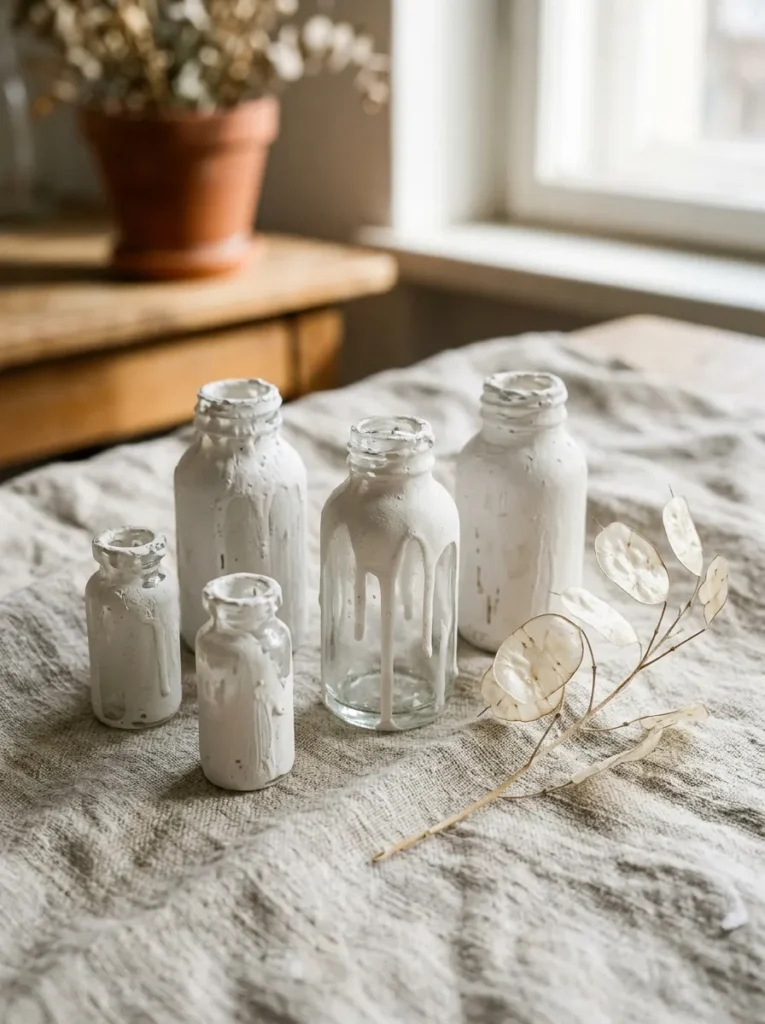
Vibe: The vases feel still and sculptural, like tiny plaster studies rather than dressed-up bottles.
Why it works: Dipping instead of painting relies on the natural drip and texture of wet plaster, a material behavior that no brush stroke can fake — the slight irregularity at the base is what reads as handmade rather than store-bought.
How to get it: Mix quick-set plaster to a thick pancake-batter consistency, dip clean glass bottles halfway, and let excess drip off upside down for a clean edge instead of wiping it smooth.
Quick Win: A $9 box of plaster of Paris covers at least six bottles, so batch them all in one session.
Shop The Look
- Plaster of Paris craft powder
- Small glass bud vase set
- Natural linen drop cloth
- Dried pampas grass stems
- Wood dowel drying rack
2. Gold-Leafed Terracotta Pots
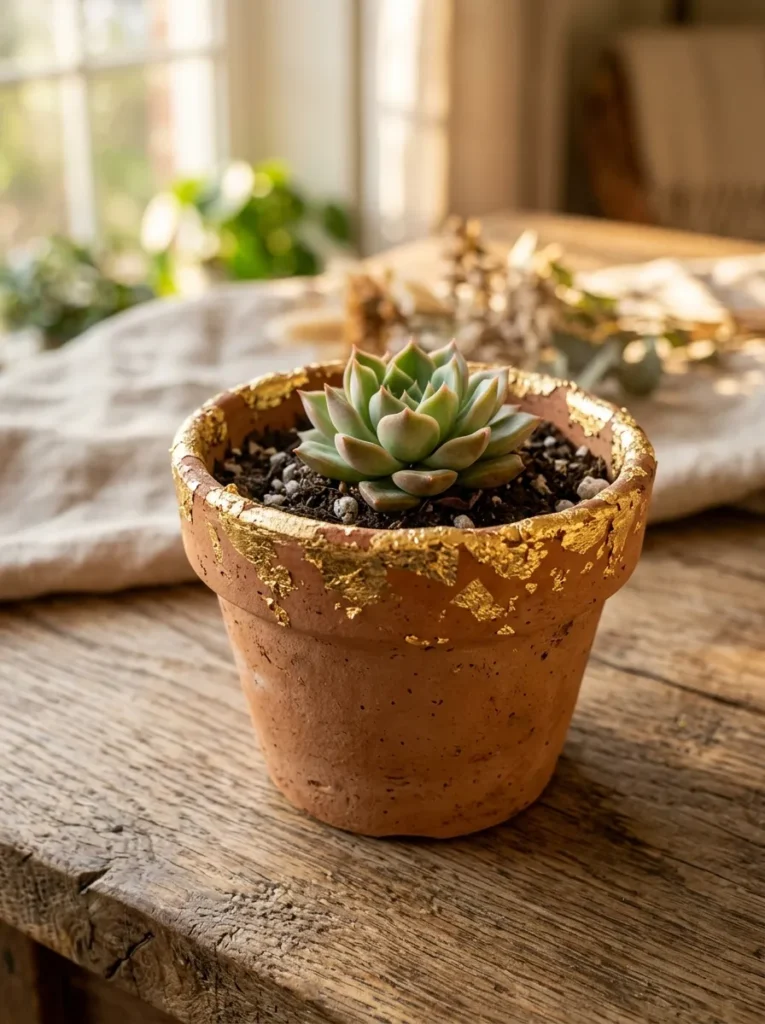
Vibe: The pot feels warm and a little luxe, the raw clay grounding the metallic accent.
Why it works: Applying gold leaf only to an irregular, torn-edge section — rather than the whole pot — uses contrast between raw and refined surfaces, a design principle where restraint makes the metallic accent feel deliberate instead of decorative overkill.
How to get it: Brush gold leaf adhesive in a rough diagonal band around the pot’s rim, let it tack for fifteen minutes, then press on gold leaf sheets and burnish gently with a soft cloth, leaving the edges torn rather than clean.
Shop The Look
- Genuine gold leaf sheet pack
- Gold leaf adhesive size
- Small unglazed terracotta pot set
- Soft burnishing cloth
- Small succulent plant
3. Linen-Wrapped Coaster Set
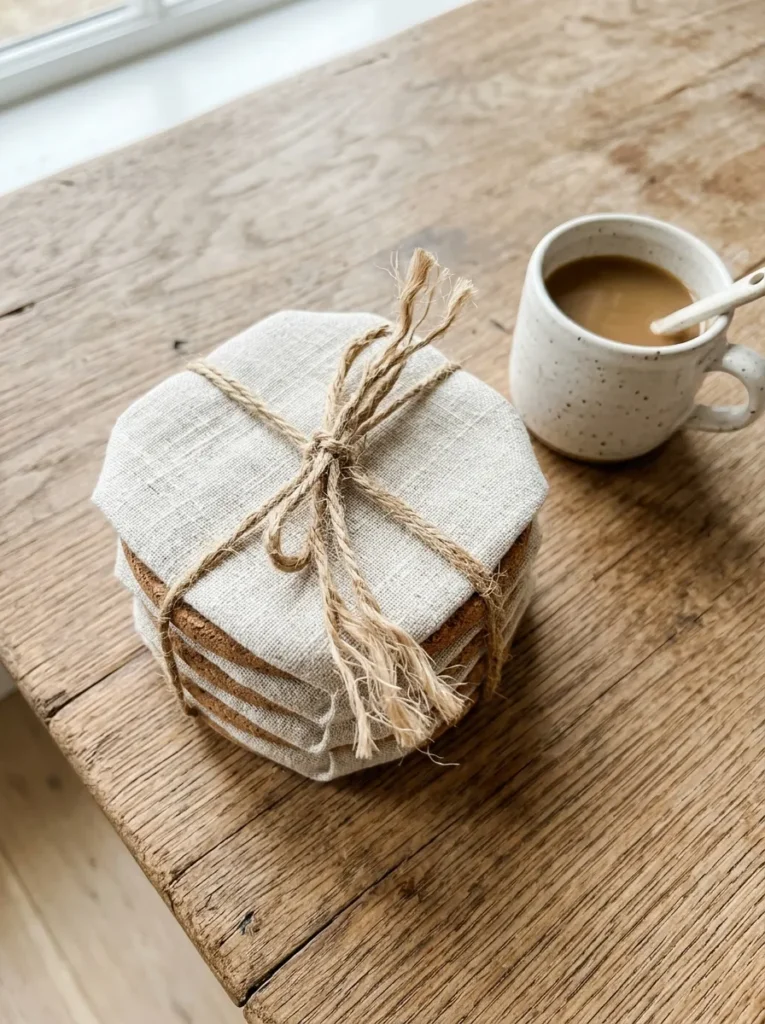
Vibe: The coasters feel airy and tactile, like they came from a small textile studio.
Why it works: Wrapping plain cork discs in linen swaps a flat, forgettable material for one with visible woven texture, and the exposed jute tie adds a second material layer — a simple texture-layering technique that turns a $2 cork coaster into something with real tabletop presence.
How to get it: Cut linen circles two inches wider than each cork coaster, hot-glue the fabric flat to the front only, and finish the edge with a single wrap of jute twine tied in a small knot at the back.
Quick Win: A $6 pack of blank cork coasters makes a full set of six in under an hour.
Shop The Look
- Blank cork coaster set of 6
- Natural linen fabric scrap
- Jute twine spool
- Fabric hot glue
- Small ceramic mug
4. Dried Botanical Wall Bundle
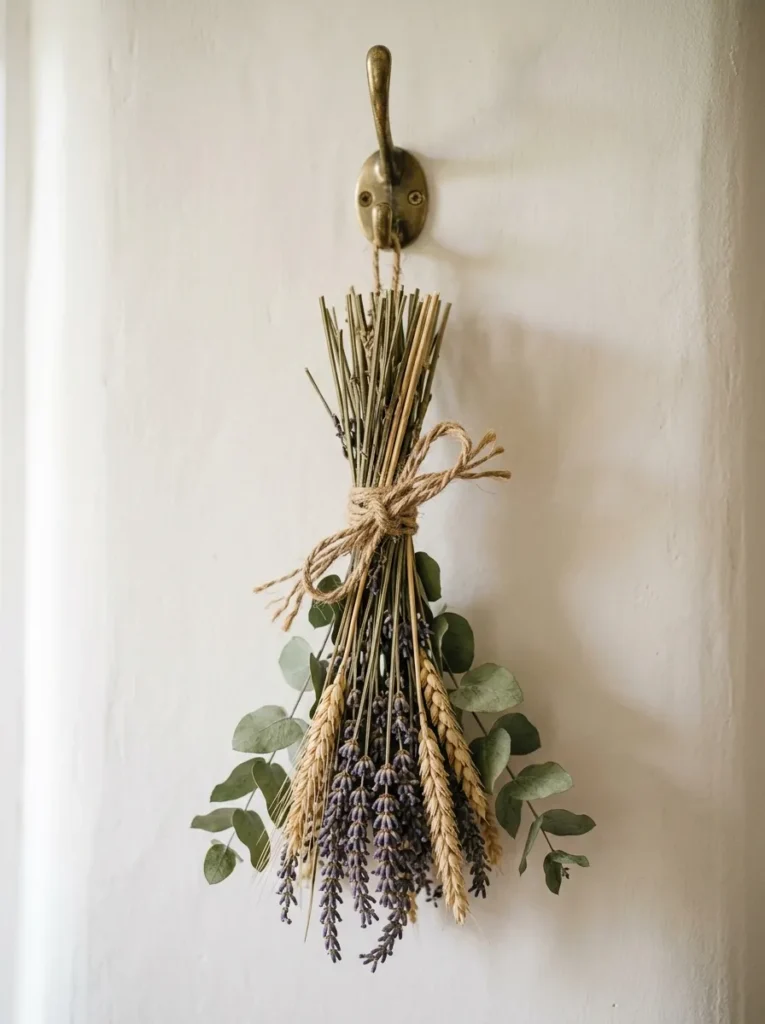
Vibe: The bundle feels hushed and quiet, a small still-life hanging on an otherwise bare wall.
Why it works: Grouping three different dried textures — feathery lavender, structured wheat, and soft eucalyptus — creates visual weight through variety within one small object, a layering technique that reads as curated rather than a single grocery-store bouquet.
How to get it: Bundle five to seven stems each of dried lavender, wheat, and eucalyptus, tie tightly with jute twine about two inches from the cut ends, and hang upside down from a single small brass hook.
Shop The Look
- Dried lavender bundle
- Dried wheat stem bundle
- Dried eucalyptus bundle
- Jute twine spool
- Small brass wall hook
5. Marbled Paper Frame Mats
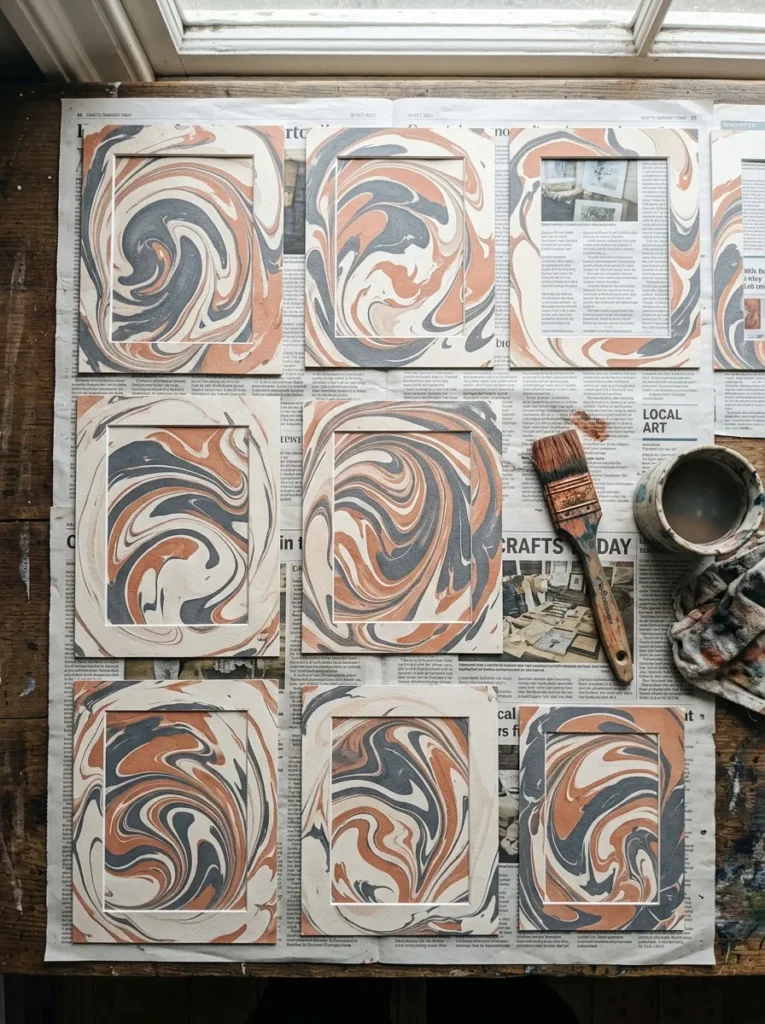
Vibe: The mats feel layered and a little unpredictable, no two swirls ever quite the same.
Why it works: Marbling relies on the natural behavior of paint floating on water, so the pattern itself is generated by physics rather than a hand-drawn design — this is why marbled paper reads as artisanal even when the technique takes only minutes to execute.
How to get it: Fill a shallow tray with water, drop soft charcoal and terracotta acrylic paint onto the surface, swirl gently with a toothpick, and lay a plain paper mat face-down onto the water for three seconds before lifting straight up.
Shop The Look
- Blank paper mat frame set
- Acrylic paint marbling colors
- Shallow marbling tray
- Wood toothpick pack
- Simple wood picture frame
6. Hand-Painted Ceramic Accent Plate
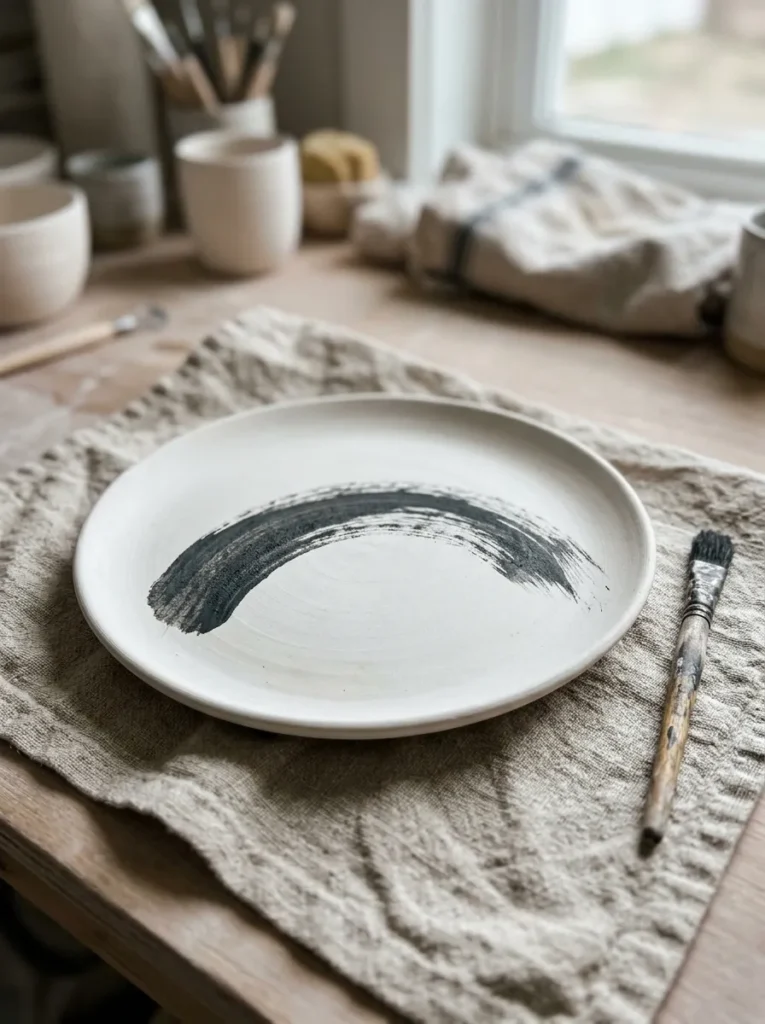
Vibe: The plate feels serene and confident, one gesture doing all the visual work.
Why it works: A single sweeping brushstroke uses negative space as the main design element — most of the plate stays bare white, so the one mark carries all the visual weight instead of competing with a busy pattern, which is exactly why it reads as gallery-adjacent rather than crafty.
How to get it: Load a flat brush with matte charcoal ceramic paint, commit to one continuous arc across the plate in a single pass without lifting the brush, and bake according to the paint’s curing instructions to set it food-safe.
Quick Win: A $10 ceramic paint pen skips mixing entirely and still gives a clean, confident line.
Shop The Look
- Matte ceramic paint set
- Plain white ceramic plate
- Fine ceramic paint pen
- Flat craft paintbrush
- Ceramic paint sealant
7. Woven Wall Hanging on a Dowel
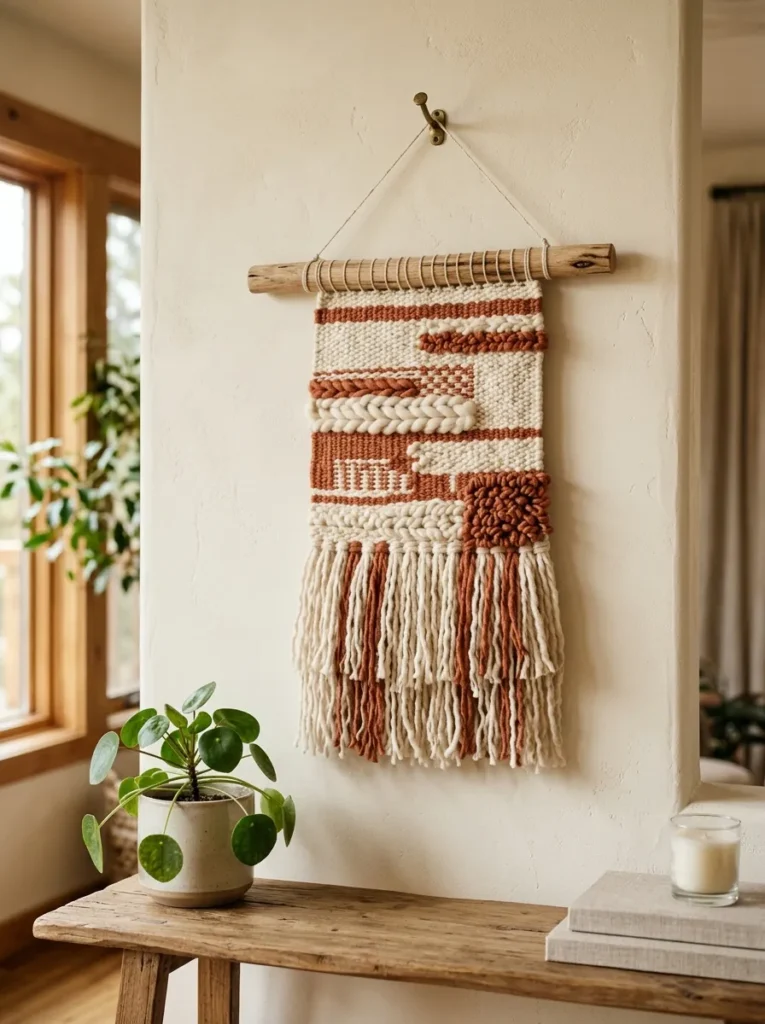
Vibe: The hanging feels layered and soft, adding texture to a bare wall without any color noise.
Why it works: Weaving in only two yarn tones instead of a rainbow of colors uses restraint the same way the rest of this style does — the fringe’s uneven length at the bottom becomes the focal texture, an intentional imperfection rather than a mistake.
How to get it: String a simple cardboard loom with warp threads, weave cream and terracotta yarn in a loose basket pattern, mount the finished piece on a raw wood dowel, and trim the fringe unevenly by hand rather than in a straight line.
Shop The Look
- Cream weaving yarn skein
- Terracotta weaving yarn skein
- Raw wood dowel rod
- Cardboard weaving loom kit
- Small brass wall nail
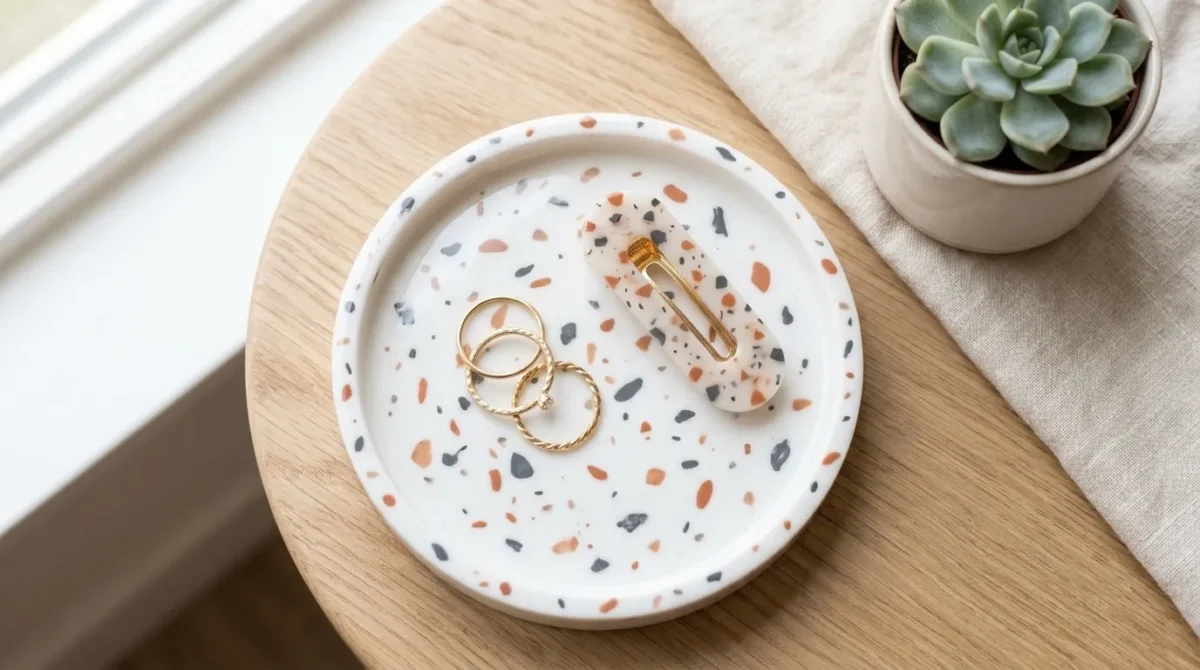
8. Painted Terrazzo-Style Trinket Tray
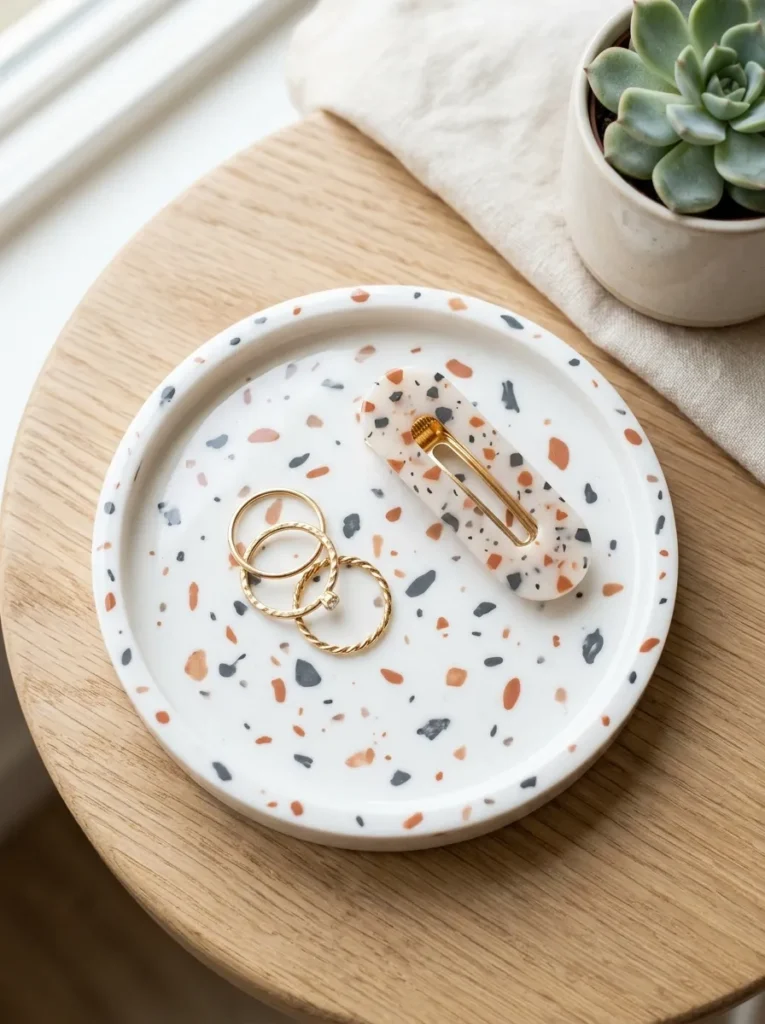
Vibe: The tray feels airy and playful, small enough to live on any nightstand or entry table.
Why it works: Painting irregular flecks by dabbing rather than drawing mimics how real terrazzo stone forms, and keeping the flecks in only two accent tones against a white base ties the piece back to the article’s core restrained palette instead of looking like confetti.
How to get it: Paint a plain white resin or ceramic tray with a base coat, then dab small irregular dots of terracotta and charcoal acrylic paint using the tip of a fine brush, varying the size of each fleck by hand.
Quick Win: A $7 blank white trinket tray from the craft aisle skips any shaping or molding step entirely.
Shop The Look
- Blank white resin trinket tray
- Acrylic paint terracotta and charcoal
- Fine detail paintbrush
- Matte sealant spray
- Small gold ring dish set
How to Start Your Chic Minimalist Craft Practice
The single best first move is buying one box of quick-set plaster. It’s the cheapest, fastest way into this style’s core technique — using a material’s natural texture instead of paint to create visual interest — and it sets up the plaster-dipped vase project as an easy, low-risk first win.
The most common mistake is over-decorating a single piece — adding paint, glitter, and stamped patterns all to one object until it looks busy instead of chic. Fix it by picking exactly one technique per project and stopping there, even when it feels too simple.
Three items under $50 that make an immediate difference: a $9 box of plaster of Paris, a $6 pack of blank cork coasters, and a small pack of genuine gold leaf sheets.
A full rotation through all eight crafts realistically takes two to three weekends done a project or two at a time, though each individual craft truly fits inside one hour including drying time worked around other tasks. Budget $15–$25 per project for materials, or $80–$120 to stock supplies for all eight at once.
Frequently Asked Questions About Chic Minimalist Crafts
What makes a craft look “chic” instead of homemade?
Restraint is the biggest factor — one material, one technique, and a tight color palette read as intentional, while multiple colors, patterns, and embellishments on a single piece read as a craft project. Sticking to warm white, terracotta, and charcoal across a whole collection helps everything feel cohesive rather than like separate experiments.
What colors should I use across these crafts?
Keep every project within warm white, terracotta, and soft charcoal, adding gold leaf only as a rare metallic accent rather than a recurring color. This narrow palette is what lets pieces from completely different techniques — plaster, paint, weaving — sit together on a shelf without clashing.
How much does it cost to make all eight crafts?
Individual projects run $10–$20 in materials each, since most rely on inexpensive bases like cork, terracotta, or resin. Stocking up for all eight at once typically costs $80–$120, and most materials have enough left over for a second round of gifts.
Can these crafts work as gifts?
Yes — the plaster-dipped vases, linen coasters, and gold-leafed pots all package well individually and don’t require assembly beyond what’s already finished. Wrap them in the same natural linen or kraft paper used in the projects themselves to keep the gift’s presentation consistent with the piece.
Which craft is best for a total beginner?
The linen-wrapped coasters are the easiest entry point, since the technique is just cutting, gluing, and tying — no paint mixing, drying chemistry, or freehand painting involved. It’s also the fastest of the eight, often finishing in twenty minutes rather than the full hour.
Ready to Try Your Own One-Hour Chic Crafts?
These 8 crafts cover plaster, paint, weaving, and dried botanicals, so there’s a project here whether your hour is free on a Tuesday night or a slow Sunday afternoon. You don’t need to make all eight at once — starting with just the plaster vases is a complete, satisfying project on its own. Today, grab one box of quick-set plaster and one small glass bottle from the recycling bin to try the first project tonight. Once it’s dry and sitting on your shelf, you’ll have proof that an hour and a few raw materials can look more considered than most store-bought decor. Pin your favorite project now, before the moment to start it slips into “someday.”