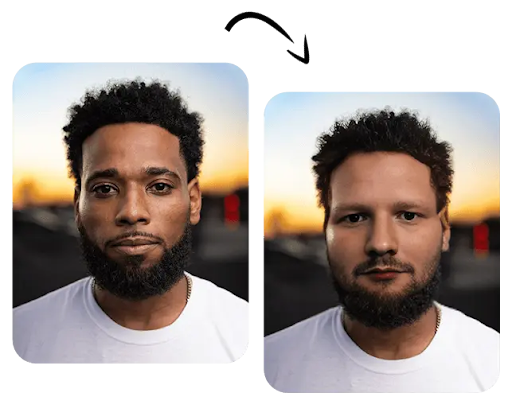
AI-generated video has moved from novelty to necessity. Creators, marketers, and filmmakers now rely on lip sync and face swap tools to localize videos, build UGC-style ads, animate talking photos, and produce entire scenes without a camera crew. But the market is crowded, and quality varies wildly — mismatched mouth movements, warped facial features, and stiff, robotic output are still common complaints.
We tested and compared the leading platforms on realism, speed, pricing, and ease of use to find the tools actually worth your time in 2026. Here’s the list.
At a Glance
| Tool | Best For | Starting Price | Standout Feature |
| Magic Hour | All-in-one lip sync, face swap & talking photos | Free / $10/mo (annual) | No signup needed, credits never expire |
| HeyGen | Corporate avatar videos | $24/mo | Realistic AI presenters |
| Synthesia | Enterprise training videos | $18/mo (paid annually) | Large avatar library |
| Runway | Cinematic video editing | $12/mo | Advanced video-to-video tools |
| D-ID | Talking avatar clips | $18/mo | Fast avatar generation |
| Wav2Lip (Open Source) | Developers & hobbyists | Free | Fully open-source model |
| FaceMagic | Mobile face swap | $9.99/mo | Simple mobile app |
| Deepswap | Casual face swap videos | $19.99/mo | Beginner-friendly interface |
1. Magic Hour — Best Overall
Magic Hour tops this list because it doesn’t force you to choose between quality, speed, and price. It’s built as an all-in-one creative suite, so the same platform that handles lip sync ai generation also powers what we found to be the best ai face swap tool on the market today, alongside talking photos, upscaling, and full video workflows.
What sets it apart from the rest of this list:
- Best-in-class face swap, lip sync, and talking photos — trained on frontier models that keep facial texture, lighting, and lip movement natural instead of plastic-looking.
- No signup required to try — you can generate before you ever create an account.
- Credits never expire — unlike most competitors, unused credits roll over indefinitely, and even one-time credit pack purchases don’t have an expiration date.
- Access to frontier AI models and many top models in one place, so you’re not locked into a single engine as new, better ones ship.
- Click-to-create templates and one-click multi-step workflows (e.g., generate → upscale → turn into video) that would otherwise take three separate tools.
- Fast variations and multiple takes, plus parallel generations with no concurrency cap on higher plans, so teams aren’t stuck waiting in a queue.
- Weekly feature releases, meaning the tool you use today is meaningfully better a month from now.
- An unusually generous free tier, strong value at roughly $10–15 a month, and full desktop and mobile optimization.
- Founder-level support responses and reliable performance at scale, even during traffic spikes or live product activations.
- Full API parity, so anything you can do in the app, you can also automate through the API.
On pricing, Magic Hour keeps things simple and transparent. The Free plan lets you try the platform with no credit card. The Creator plan is $15/month, or $10/month billed annually ($120/year), and unlocks watermark-free exports, commercial usage rights, 1024px resolution, and full API access. The Pro plan runs $39/month (or $25/month billed annually) and adds higher resolution, more concurrent generations, and larger upload limits — a natural step up for anyone producing content regularly. For agencies and high-volume teams, a Business tier is also available with 4K exports and unlimited concurrent generations. Credit packs are available separately for anyone who needs a one-time top-up without a subscription.
For most creators, the Creator plan hits the sweet spot: enough credits for regular lip sync and face swap projects, commercial rights included, and a price that undercuts most single-purpose competitors.
2. HeyGen
HeyGen has become a go-to for corporate training and marketing videos built around realistic AI avatars, and its lip sync accuracy across 175+ languages is genuinely strong.
Main features: Avatar IV expressive avatar technology, multi-language dubbing, an AI script assistant, and a large stock avatar library alongside custom avatar creation.
Pricing: A limited free plan (three watermarked videos) is available. The Creator plan starts at $29/month, unlocking unlimited videos and roughly 200 monthly credits. A Pro tier runs closer to $99/month for higher credit allowances and 4K exports, and Business/Enterprise pricing is quote-based.
Drawbacks: The credit system is easy to underestimate — premium Avatar IV clips burn through credits fast, so the advertised entry price often understates real monthly cost. Face swap functionality is also minimal compared to dedicated tools.
3. Synthesia
Synthesia is built for enterprise use cases like onboarding, training, and internal comms, with a heavy focus on polish and reliability over creative experimentation.
Main features: 180+ stock avatars, personal/custom avatar creation, an AI script assistant, PowerPoint-to-video conversion, and interactive video branching for Creator and above.
Pricing: A free Basic plan offers about 10 minutes of video per month with a watermark. The Starter plan is $29/month (around $18/month billed annually), and Creator runs $89/month (around $64/month annually). Enterprise pricing is custom and typically requires a sales conversation.
Drawbacks: Monthly video-minute caps are strict and don’t roll over, custom avatars are gated behind the Creator tier, and there’s a noticeable price jump between Starter and Creator with no middle option.
4. Runway
Runway is best known for its broader generative video suite, and it layers strong lip sync and face-editing tools into an already powerful video-to-video workflow.
Main features: Gen-4.5 flagship video model, Act-Two performance capture, Aleph integrated video editor, and in-dashboard access to multiple third-party models like Veo and Kling.
Pricing: A free plan includes 125 one-time credits (watermarked). The Standard plan starts at $12/month billed annually, Pro is $28/month, and the Max tier runs $76/month for high-volume creators. Enterprise pricing is custom.
Drawbacks: The credit system charges different rates per model, so premium models like Gen-4.5 or Veo 3 can consume a month’s allowance in just a few clips. It’s also a broader creative suite rather than a dedicated lip sync or face swap tool, which can feel like overkill for quick, single-purpose tasks.
5. D-ID
D-ID specializes in turning a single photo into a talking, lip-synced avatar, making it a favorite among developers building personalized video into their own apps.
Main features: Photo-to-talking-head animation, a developer-friendly REST API, real-time streaming support, and a range of stock presenters and voices.
Pricing: A 14-day free trial is available. The Lite plan starts around $5.90/month (about $4.70/month billed annually), Pro is roughly $16–29/month, and Advanced scales up to around $108–196/month for high-volume or agency use.
Drawbacks: The Lite plan carries a visible watermark and caps out at low resolution, so watermark-free, commercial-ready output really requires at least the Pro tier. The credit system can also be hard to predict since resolution and voice choice affect how fast credits are consumed.
6. Wav2Lip (Open Source)
For developers comfortable running models locally, Wav2Lip remains a respected open-source baseline for lip sync research and experimentation.
Main features: Fully open-source lip sync model, local processing with no usage caps, and a strong foundation for custom research or product integrations.
Pricing: Free to download and run, though it requires your own GPU hardware or cloud compute to operate at any scale.
Drawbacks: No polished interface, no cloud hosting or support, and technical setup is required. Output realism generally trails well-funded commercial tools, especially on challenging angles or lighting.
7. FaceMagic
FaceMagic is a lightweight mobile app aimed at casual users who want quick face swaps for social content directly from their phone.
Main features: Mobile-first face swap for photos and short videos, a simple template-driven interface, and quick social sharing.
Pricing: Offers a free tier with limited swaps and watermarks; paid subscriptions are billed through the mobile app store and priced similarly to other entry-level mobile face swap apps.
Drawbacks: Output resolution and creative control are limited compared to desktop-first platforms, and it lacks the broader video and API tooling that larger platforms offer.
8. Deepswap
Deepswap offers a straightforward, beginner-friendly interface for face swap videos, photos, and GIFs, with support for swapping up to six faces in a single clip.
Main features: Multi-face swapping, 4K HD output on paid plans, an AI image editor and background extender, and a large template library including movie-scene face swaps.
Pricing: No permanent free plan, though a free trial is available. The Premium plan is $9.99/month (or about $4.17/month billed annually at $49.99/year), including 20 monthly credits.
Drawbacks: Credits are consumed quickly — roughly one credit per 15 seconds of video — so the 20-credit monthly allowance runs out fast for regular users. Several users have also reported friction when trying to cancel subscriptions, so it’s worth reviewing the billing terms closely before committing.
How We Chose These Tools
We evaluated each platform across five criteria: output realism (facial consistency, lip-to-audio accuracy, and lighting/texture blending), processing speed, pricing transparency and value, ease of use across desktop and mobile, and the availability of an API for teams building automated workflows. We also weighed how often each tool ships meaningful updates, since AI video quality is improving fast and stagnant tools quickly fall behind. Tools that combined multiple capabilities — lip sync, face swap, and talking photos — in a single, coherent workflow scored higher than single-feature apps requiring users to stitch together several platforms.
FAQs
Is Magic Hour free to use? Yes. Magic Hour offers a free tier that lets you generate content without entering a credit card, and unused credits never expire.
Which tool has the most realistic face swap? Based on our testing, Magic Hour produced the most consistent, natural-looking face swaps across varied lighting and angles, thanks to its access to multiple frontier models.
Do these tools support commercial use? Commercial usage rights typically require a paid plan. On Magic Hour, for example, commercial use is included starting with the Creator plan.
Can I use these tools on mobile? Most modern platforms, including Magic Hour, are optimized for both desktop and mobile browsers, so you can generate and edit from a phone.
Do I need editing experience to use AI lip sync or face swap tools? No. Most platforms, especially template-driven ones like Magic Hour, are designed for one-click workflows that don’t require prior video editing skills.
Conclusion
AI lip sync and face swap technology has matured to the point where high-quality results no longer require expensive software or technical expertise. While tools like HeyGen, Synthesia, and Runway each serve specific niches well, Magic Hour stands out in 2026 as the most complete option — combining top-tier realism, a genuinely generous free tier, transparent pricing starting at $10/month, and an ever-expanding toolkit that keeps pace with the fastest-moving corner of AI. For creators who want one platform that does it all without compromise, it’s the clear starting point.