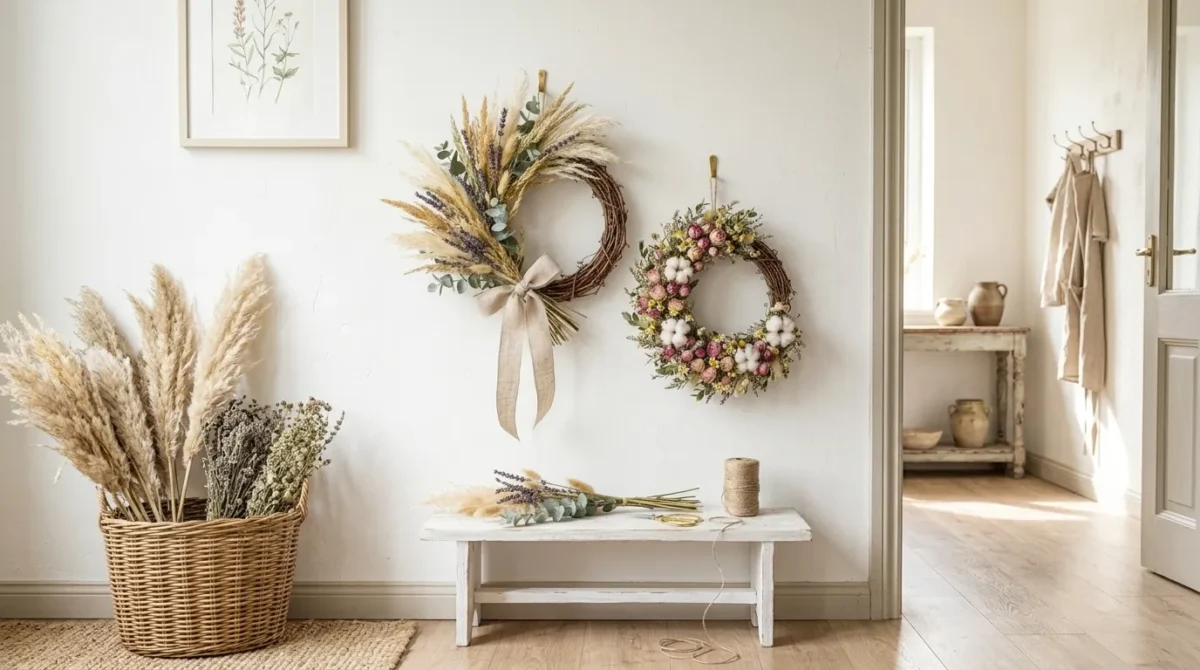
Best-selling craft ideas are handmade products that consistently convert browsers into buyers — items that combine low material cost, accessible production techniques, and strong visual appeal into something people genuinely want to own and give as gifts. This article gives you 13 proven, market-tested Craft craft ideas that sell reliably at markets, on Etsy, and through social media shops, with enough creative depth to build a recognizable maker brand around each one.
Most Selling craft businesses stall not because the maker lacks skill but because the product lacks market fit — beautiful things made with genuine care that sit unsold because nobody thought about the buyer before the making began. The ideas in this list work in the opposite direction: they start with what sells, add the maker’s creative voice, and produce a product line that earns while it inspires. Here are 13 ideas worth saving — and building.
Why Best-Selling Craft Ideas Work So Well
Selling Craft best-selling handmade Selling craft category has its roots in the Arts and Selling Crafts movement of the late 19th century — William Morris’s conviction that everyday objects deserved the same beauty and intentionality as fine art, and that the maker’s hand should be visible in everything from a ceramic mug to a printed textile. That tradition established the commercial and philosophical framework that the contemporary handmade market still operates from: people pay a premium for handmade goods not simply because they are well-made but because they carry the evidence of human attention and individual creative voice in a mass-produced world. The Etsy platform, which reached 95 million active buyers in 2023 according to its annual report, has industrialized access to that premium without eliminating it — handmade goods now reach global markets while retaining the intimate, personal quality that distinguishes them from manufactured alternatives.
The materials that define the best-selling handmade Selling craft landscape are those that balance low input cost with high perceived value. Air-dry clay and polymer clay both cost $8–20 per kilogram and produce finished products that retail for $15–80 per piece, delivering material-to-retail multiples of 5–15x that make them among the most commercially efficient craft materials available. Natural beeswax for candle making costs $15–25 per kilogram and produces candles that retail for $18–45 each. Linen and cotton fabric for tote bags and pouches costs $8–15 per meter and produces items that retail for $25–65. Dried botanicals for wreaths and arrangements cost $20–60 for a full wholesale bundle and produce finished pieces that retail for $45–150. Across all categories, the pattern is consistent: natural, tactile materials with visible maker’s-hand quality command premium retail prices relative to their input costs.
The trend is accelerating with structural tailwinds that compound each other. The sustainability movement has made handmade and locally produced goods the ethical default for a growing segment of consumers — a 2023 Mintel report found that 64% of consumers aged 25–44 actively seek handmade or small-batch products when purchasing gifts. Social media has collapsed the discovery barrier that previously limited handmade sellers to local markets — a single TikTok or Instagram Reels video of a maker’s process can generate thousands of shop visits and hundreds of orders overnight, a reach that would have required years of market attendance to build in the pre-social era. Simultaneously, the post-pandemic normalization of home-based creative businesses has made the infrastructure of selling online — photography, packaging, shipping, digital payment — accessible to makers without retail or business experience.
Small-scale makers and beginners can access every idea in this list without commercial premises, specialist equipment, or large upfront investment. The minimum viable product in every category here can be produced on a kitchen table with tools and materials costing under $100. The commercial skill that determines success is not production scale but product consistency and photography quality — a maker who produces 10 identical, beautifully photographed pieces will consistently outsell a maker who produces 100 inconsistent pieces photographed on a cluttered background. Start with one product, make it perfectly, photograph it exceptionally, and list it before the inventory is large enough to feel safe.
Style at a Glance
| Element | Detail |
|---|---|
| Philosophy | The best handmade products start with the buyer’s desire and end with the maker’s creative voice — market fit and artistic identity are not opposites |
| Key Materials | Air-dry clay, beeswax, linen, cotton, dried botanicals, polymer clay, natural dyes, beeswax, macrame cord |
| Price Range | $15 entry-level products to $150 premium pieces, with the $25–65 range representing the highest-volume sweet spot |
1. Air-Dry Clay Trinket Dishes and Ring Holders
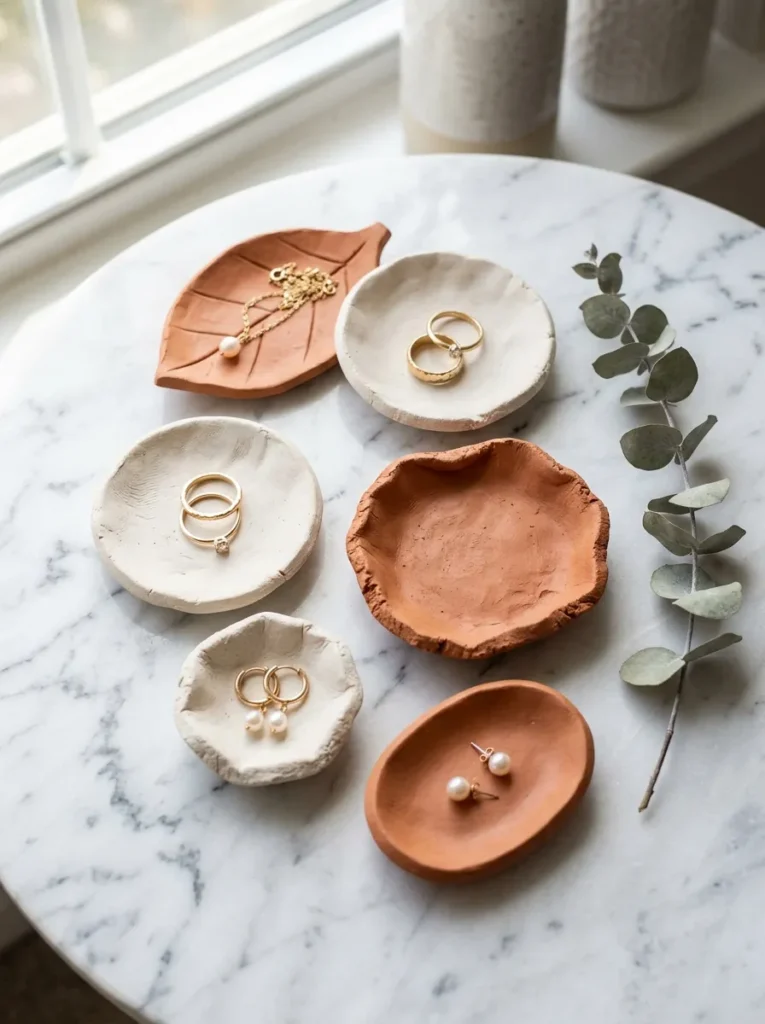
Vibe: Clean and artisanal — the kind of small object that makes a bedside table or desk feel considered.
Why it works: Selling Craft Air-dry clay trinket dishes are the single most commercially accessible entry point in the handmade market for three reasons that compound each other. The material cost per piece is $0.80–2.00 (approximately 100–200g of clay per dish), the retail price point of $15–30 per dish sits within the impulse-purchase range for most buyers, and the production technique — hand-pinching a ball of clay into a shallow dish form — requires no specialist tools, no kiln, and no prior ceramic training. The visual appeal is immediate and universal: the finger-pinch texture visible on the interior surface of a hand-formed dish is the mark of the maker’s hand that buyers are specifically paying for, and it is the detail that distinguishes a handmade clay dish from a manufactured one at a glance. The product photographs exceptionally — the organic forms, texture, and matte surface of air-dry clay perform beautifully under natural window light, making high-quality product photography achievable without professional equipment.
How to get it: Selling Craft Use Das Modelling Clay or Crayola Air-Dry Clay for consistent white results, or Terracotta Air-Dry Clay from Reeves for the warm earth tone that is currently the stronger seller. Roll each dish base to 8mm thickness using two timber guides of that depth as rolling rails — this produces consistent thickness across the base that prevents cracking during drying. Pinch the walls upward from the base rather than thinning them from above, which maintains even wall thickness. Dry flat for 24 hours, then sand any rough edges with 220-grit sandpaper before sealing with a matte Mod Podge coat to increase durability.
Quick Win: Packaging trinket dishes in a small kraft paper box with shredded paper fill and a hand-stamped brand tag increases perceived value by $5–10 per unit without adding more than $0.80–1.20 in packaging cost — the unboxing presentation is a significant driver of repeat purchase and social media sharing for small handmade products.
Shop the Look
| Product |
|---|
| White air dry clay 1kg block |
| Terracotta air dry clay 500g |
| Matte Mod Podge sealer brush on |
| Kraft paper gift box small set |
| Fine sandpaper 220 grit pack |
Also view: 13 Craft Room Makeover Ideas for Better Organization
2. Soy Wax Candles with Dried Botanical Embeds
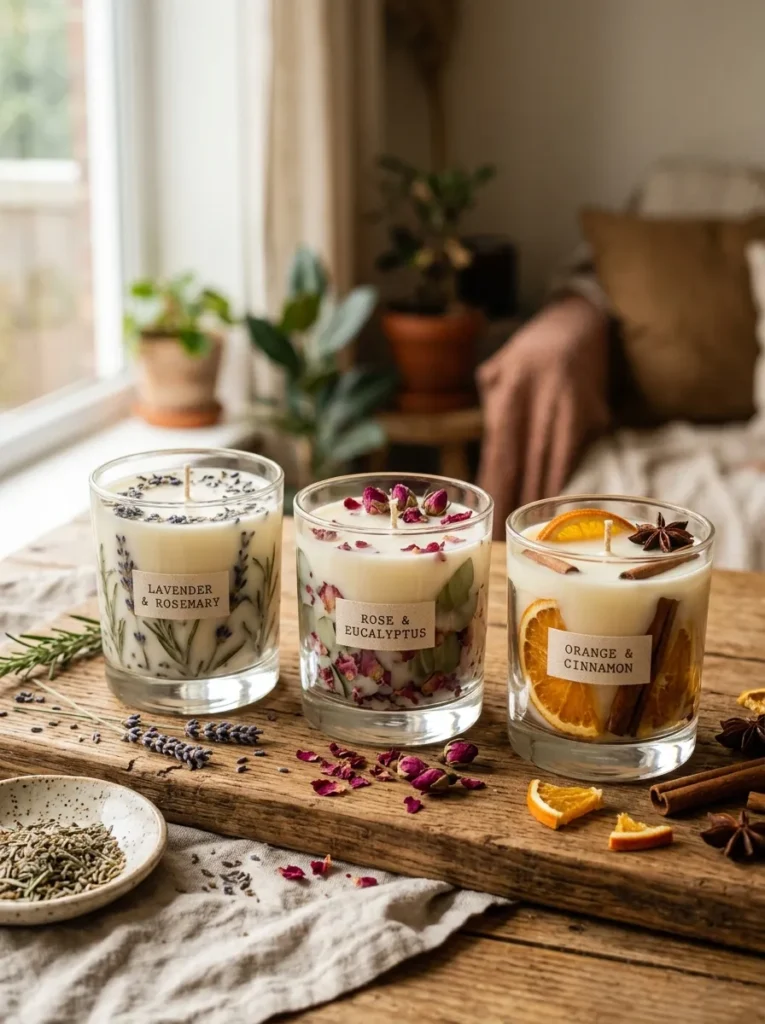
Vibe: Warm and artisanal — the candle that looks as good unlit as it does burning.
Why it works: Selling Craft Soy wax candles with dried botanical embeds occupy the premium segment of the handmade candle market because the botanical embeds add a visual complexity that plain poured candles cannot match — the arrangement of dried lavender, rose petals, or citrus slices visible through a clear glass vessel makes each candle a unique composition that buyers respond to as both a functional product and a decorative object. The soy wax base is the correct choice over paraffin for three commercially relevant reasons: it is marketed as a natural, sustainable alternative (which aligns with the values of the handmade buyer demographic), it burns more cleanly with less soot (a genuine functional benefit), and it adheres to the glass vessel walls more cleanly than paraffin, keeping the botanical embed visible rather than clouded by wax residue. Material cost per candle (wax, wick, vessel, botanicals, fragrance) runs $4–8; retail price $22–45 depending on size and botanical complexity.
How to get it: Selling Craft Pour soy wax at 60°C rather than the commonly recommended higher temperatures — lower pour temperature reduces air bubble formation around the botanicals, keeping the embed arrangement visible. Press botanicals against the interior glass wall using a butter knife dipped in warm wax before pouring the main wax volume — this holds them in position during the pour rather than allowing them to float upward. Use a 100% soy wax with a melt point of 50–52°C (Golden Brands 464 is the industry standard) for the cleanest adhesion to glass and the most consistent finish.
Shop the Look
| Product |
|---|
| Soy wax flakes 1kg Golden Brands 464 |
| Clear glass candle vessel 200ml |
| Cotton wick pre-tabbed set |
| Dried lavender bunch craft |
| Dried rose petal bag |
Also view: 22 Easter Porch Decorating Ideas for a Cheerful Entry
3. Macrame Wall Hangings and Plant Hangers
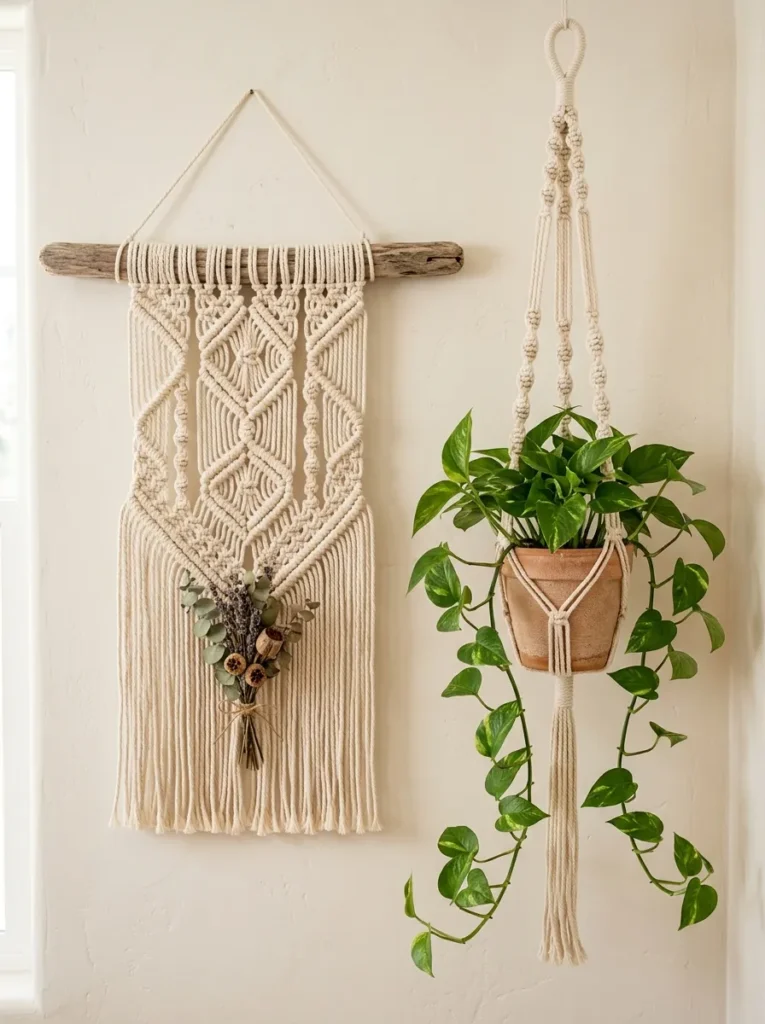
Vibe: Warm and textural — the wall piece that makes a plain wall feel like a designed interior.
Why it works: Selling Craft Macrame wall hangings and plant hangers are among the most consistently searched and purchased handmade products on Etsy and at Selling craft markets because they occupy a rare market position: they are perceived as premium handmade objects by buyers (commanding $35–150 price points) while being produced from materials — natural cotton macrame cord at $8–15 per 100-meter roll — that keep material costs at $3–15 per finished piece. The fundamental appeal is the visible complexity of the knotwork: a well-executed square knot pattern or spiral half-hitch section represents the kind of repetitive, meditative skill that buyers appreciate but would not practice themselves, which is the exact commercial dynamic that supports premium handmade pricing. Plant hangers have an additional functional dimension — they solve a real home decor problem (how to display trailing plants in limited floor space) — which makes them a considered purchase rather than an impulse one, supporting repeat purchasing as buyers acquire more plants.
How to get it: Selling Craft 3mm single-strand cotton macrame cord is the correct starting specification — it is substantial enough to show knot texture clearly in photographs, flexible enough to execute all standard macrame knots without hand fatigue, and available in natural and dyed versions from all craft suppliers. Master the four foundational knots — square knot, half hitch, lark’s head, and gathering knot — before designing products, as these four knots produce the full range of macrame patterns available in the market.
Quick Win: A single 100-meter roll of 3mm natural cotton macrame cord ($8–15) produces approximately four standard plant hangers or two medium wall hangings — enough to list a complete product range on Etsy with the materials from a single purchase, making this the lowest entry-cost product in this list relative to potential listing inventory.
Shop the Look
| Product |
|---|
| 3mm single strand cotton macrame cord |
| Driftwood dowel set natural |
| Macrame knot guide book |
| Terracotta pot small set |
| Trailing pothos plant small |
4. Hand-Stamped Linen Tote Bags
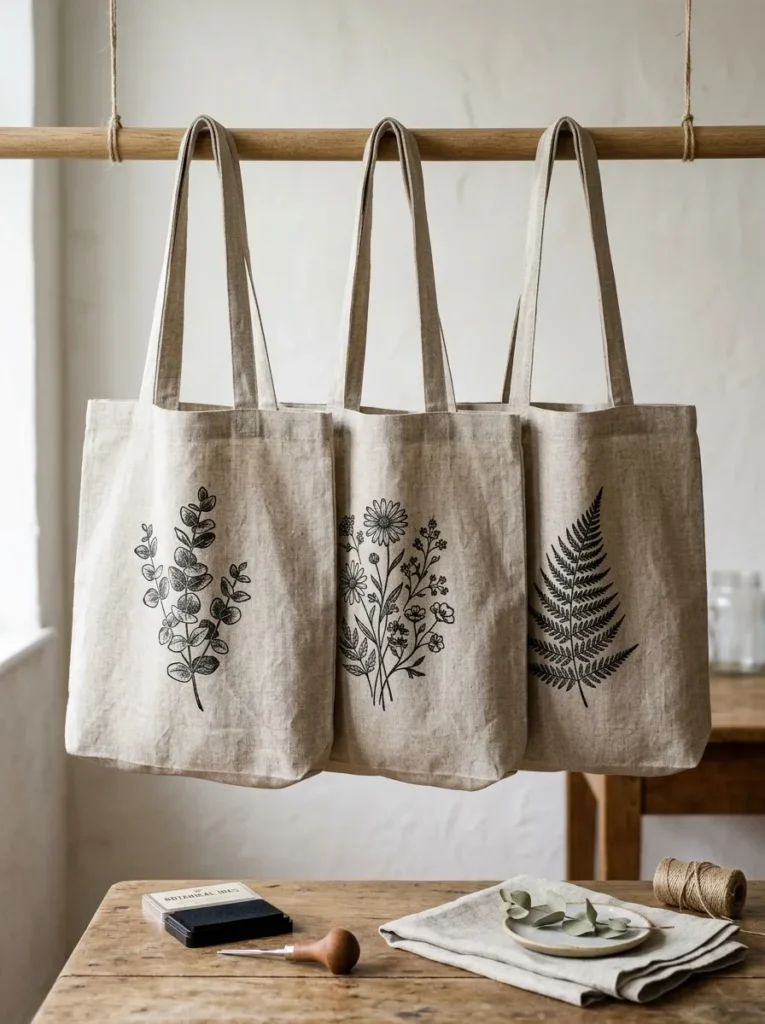
Vibe: Clean and natural — the tote bag that makes grocery shopping feel like a considered aesthetic choice.
Why it works: Selling Craft Hand-stamped linen tote bags are one of the most commercially efficient products in the handmade market because the product itself has achieved mass-market mainstream adoption — the reusable tote bag is no longer an alternative-lifestyle purchase but a daily functional item for the majority of consumers — while the hand-stamped botanical version commands a premium that manufactured printed totes cannot compete with. The slight variation in ink coverage between each hand-stamped bag — the imperfect quality that results from hand-applied pressure rather than machine printing — is the quality that buyers specifically seek: it confirms the handmade character of the product. Material cost per bag (blank linen tote $2–4, fabric ink $0.20–0.50 per print) produces a retail-to-material ratio of 8–15x at the standard $22–35 retail price. The botanical stamp design category — eucalyptus, wildflowers, ferns, herbs — consistently outperforms text-based designs because botanical imagery has broad cross-demographic appeal and ages well as a design choice.
How to get it: Selling Craft Carve custom rubber stamps from Speedball Speedy-Carve block ($8–12 for a block that yields 6–10 usable stamps) using a standard linocut carving tool set. Practice the design on paper first to understand the pressure needed for clean, consistent ink transfer before stamping on linen. Use Speedball Fabric Ink in Lamp Black — it bonds to linen without heat-setting for most applications, but heat-set with a hot iron for 30 seconds after stamping for permanent, washable results.
Shop the Look
| Product |
|---|
| Natural linen tote bag blank set |
| Speedball Speedy-Carve carving block |
| Linocut carving tool set |
| Speedball fabric ink lamp black |
| Textile ink brayer roller small |
5. Polymer Clay Earrings with Abstract Designs
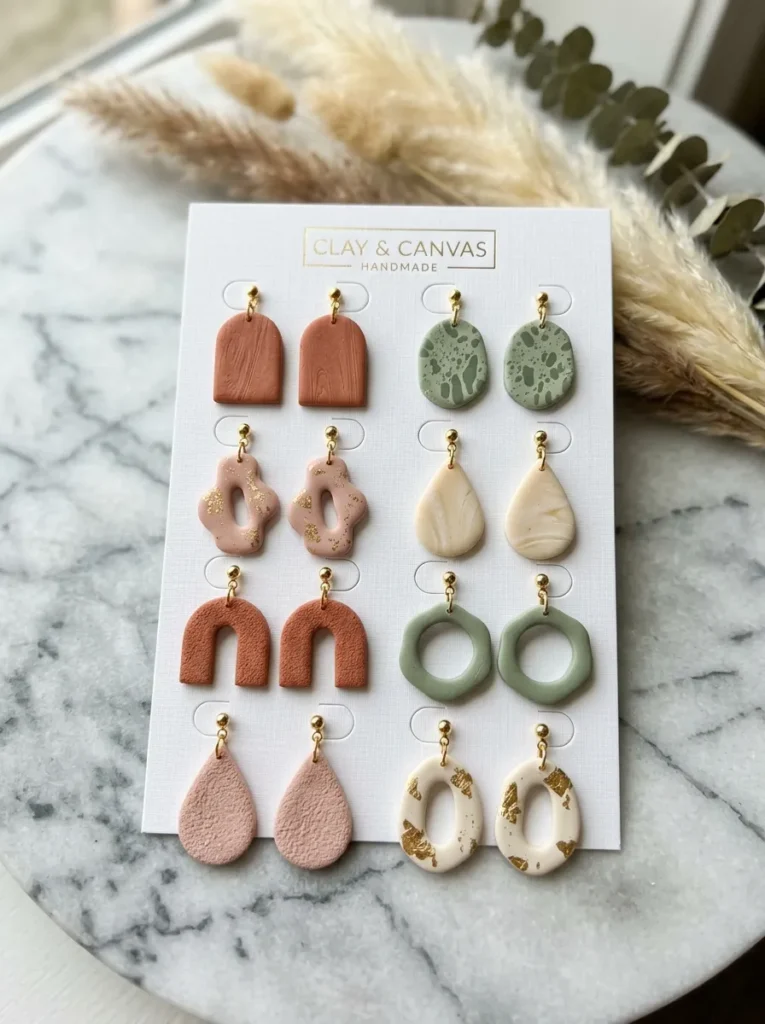
Vibe: Clean and contemporary — a jewelry collection that reads as gallery-quality design at an accessible price point.
Why it works: Selling Craft Polymer clay earrings are currently the highest-velocity handmade jewelry category on both Etsy and TikTok Shop, driven by three compounding commercial advantages. First, the material-to-retail ratio is exceptional: polymer clay costs $3–6 per 60g block, which produces 8–12 pairs of earrings at a material cost of $0.30–0.80 per pair, retailing at $18–45 per pair. Second, the production technique — conditioning clay, rolling to consistent thickness, cutting shapes, curing in a domestic oven, and attaching hardware — is achievable without specialist equipment beyond a pasta machine (for consistent clay thickness), a set of cutters, and a domestic oven. Third, the product photographs exceptionally: the matte surface and organic edge quality of hand-cut polymer clay performs beautifully under natural light, and a single flat-lay product photograph on a white or marble surface produces the clean, editorial imagery that converts social media views into sales.
How to get it: Selling Craft Use Sculpey Premo or Cernit polymer clay — both condition smoothly, hold fine detail through curing, and produce a consistent matte finish without additional treatment. Roll clay to 3mm thickness using a pasta machine on setting 3 — thinner than this and earrings are fragile; thicker and they become heavy for daily wear. Cure at 130°C for 30 minutes on a ceramic tile — the tile prevents the flat underside of each piece from developing a shiny contact patch from the baking tray surface.
Quick Win: Photographing polymer clay earrings on a white card earring display board ($0.30–0.80 each from jewelry supply wholesalers) rather than flat on a surface produces a retail-ready product image that communicates the product’s wearable context and scale immediately — the display board is the single photography tool that most improves earring conversion rates on Etsy listings.
Shop the Look
| Product |
|---|
| Sculpey Premo polymer clay set |
| Pasta machine clay conditioning |
| Polymer clay cutter set geometric |
| Gold filled ear wire set |
| White card earring display board set |
6. Beeswax Wrap Sets as Zero-Waste Kitchen Products
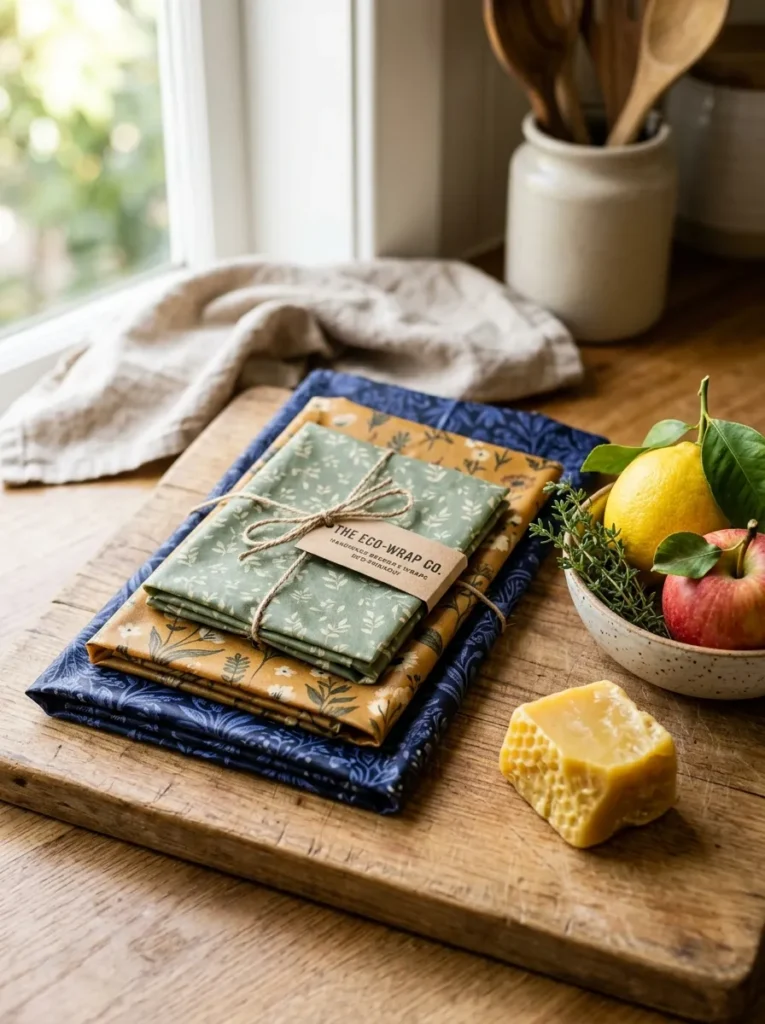
Vibe: Warm and natural — a kitchen product that makes zero-waste living feel like an aesthetic upgrade rather than a sacrifice.
Why it works: Selling Craft Beeswax wraps sit at the intersection of the zero-waste movement and the handmade gift market — they are simultaneously a functional product with a genuine environmental benefit (replacing single-use cling wrap), a beautiful object with strong visual appeal when made in botanical-print fabric, and an accessible price-point gift ($25–45 for a three-piece set) that the sustainability-conscious consumer purchases repeatedly for themselves and as gifts. The production technique is straightforward: cotton fabric cut to size, natural beeswax and jojoba oil mixture applied, heat-set in the oven, and cooled on a flat rack. Material cost per three-piece set (fabric, beeswax, jojoba oil) runs $3–6; the three-piece retail price of $25–45 delivers a 5–10x material-to-retail multiple. The sustainability positioning eliminates the need for complex sales copy — the product’s environmental benefit is its own marketing argument.
How to get it: Selling Craft Use 100% cotton quilting fabric in pre-shrunk prints — synthetic fabric blends do not absorb beeswax evenly and produce a streaky, uneven coating. The wax mixture ratio of 90% beeswax to 10% jojoba oil by weight produces the correct tackiness for food-clinging use without being sticky enough to leave residue on food surfaces. Apply the wax by sprinkling grated beeswax over the fabric on a baking tray and melting in a 110°C oven for 4–5 minutes, then spreading with a silicone brush while the wax is liquid before the tray cools.
Shop the Look
| Product |
|---|
| Natural beeswax block cosmetic grade |
| 100 percent cotton quilting fabric botanical print |
| Jojoba oil food grade |
| Silicone pastry brush heat resistant |
| Kraft swing tag label set |
7. Hand-Painted Ceramic Mugs with Botanical Designs
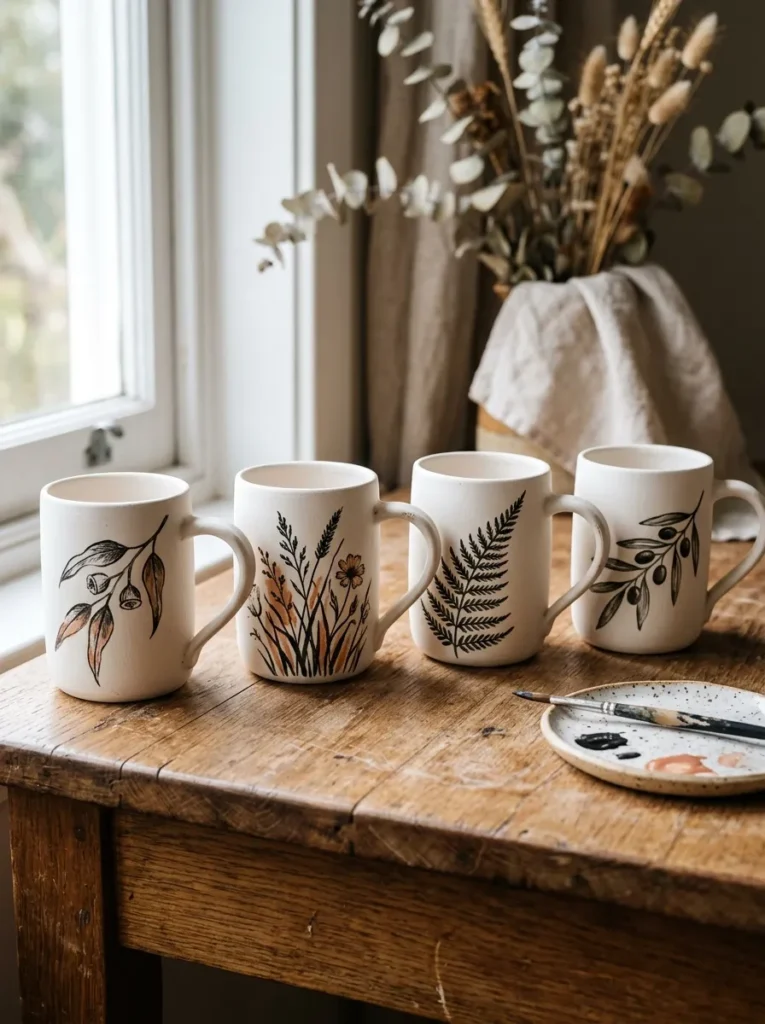
Vibe: Warm and artisanal — the mug that makes the first cup of coffee of the day feel like a small ceremony.
Why it works: Selling Craft Hand-painted ceramic mugs are one of the most consistent best-sellers in the handmade market because the mug is the most universally purchased gift object in Western consumer culture — it is acceptable as a gift for any relationship type, any age demographic, and any occasion, which gives a distinctive hand-painted mug range the broadest possible buyer base. The botanical design category — eucalyptus, wildflowers, ferns, olive branches — is the strongest visual choice because it has broad cross-demographic appeal, ages well as a design trend, and translates to brushwork that rewards slight imperfection: a slightly loose botanical line looks more characterful than a rigidly precise one. Purchasing plain white bisque mugs from a ceramic supplier ($2–5 each) and decorating with food-safe ceramic underglaze before firing at a local pottery studio (community kiln firing costs typically $3–8 per piece) produces finished mugs at $6–15 material cost that retail for $28–55 each.
How to get it: Use Amaco Velvet Underglaze in Jet Black and Tuscan Red for the core botanical palette — both are food-safe when fired to cone 06, produce clean brushstrokes on bisque surface, and fire to a consistent matte finish that reads as hand-crafted rather than commercially produced. Apply two coats of underglaze for solid color coverage, three coats for deep black. Fire at a local community pottery studio or ceramic supply shop — most offer open firing sessions for non-members at $3–10 per piece including glaze firing.
Shop the Look
| Product |
|---|
| White bisque mug plain ceramic |
| Amaco velvet underglaze jet black |
| Amaco velvet underglaze tuscan red |
| Fine detail brush set ceramic |
| Food safe ceramic glaze clear |
8. Natural Dye Linen and Cotton Pouches
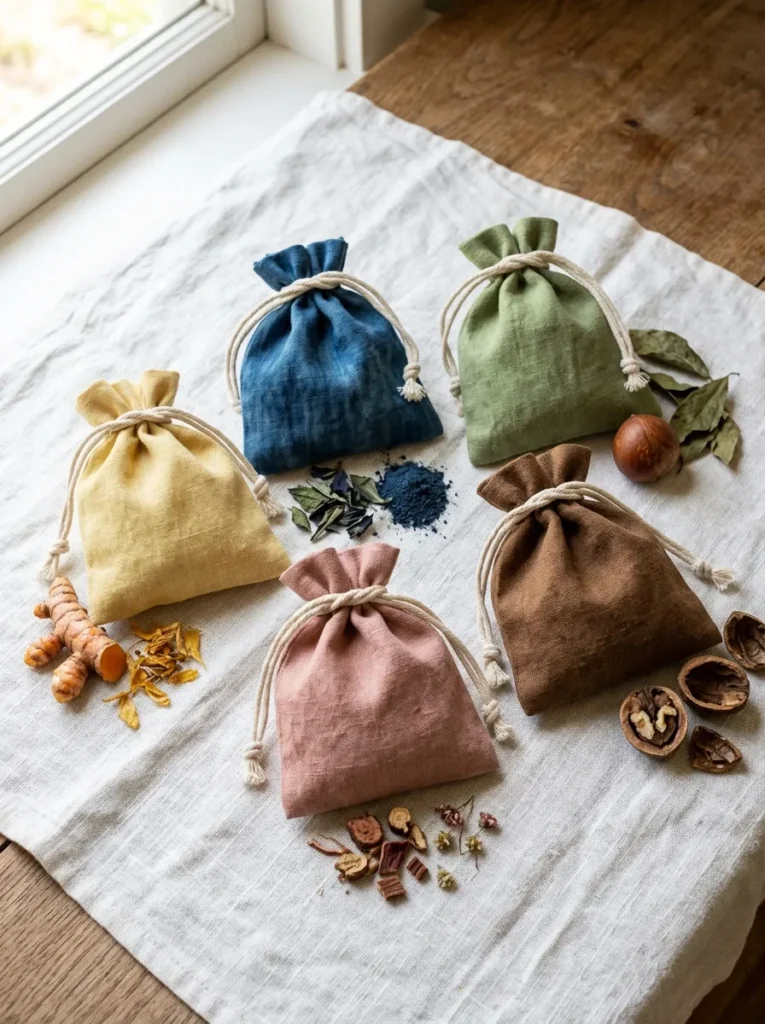
Vibe: Natural and warm — a pouch collection that carries the color of the earth it came from.
Why it works: Selling Craft Natural dye linen pouches are positioned at the premium end of the handmade gift market because they combine two high-value maker narratives in a single product: the slow-craft quality of natural plant dyeing (which buyers associate with artisanal expertise and environmental responsibility) and the functional utility of a beautifully made pouch (which buyers purchase for jewelry storage, gift wrapping, travel organization, and everyday carry). The natural dye process — mordanting fabric in alum solution, dyeing in plant-based dye baths (turmeric, indigo, avocado pits, walnut hulls, madder root), and fixing color with salt or tannin — produces colors with the characteristic softness and variation that synthetic dyes cannot replicate, and that variation is what buyers are paying for: no two naturally dyed pieces are identical, making each pouch genuinely unique.
How to get it: Start with alum mordant (potassium aluminium sulphate, $8–15 for 500g, sufficient for 50+ pieces) — it is the safest, most color-consistent mordant available and compatible with all plant dye sources. Mordant the linen pouches before dyeing by simmering in a 15% weight-of-fiber alum solution for 60 minutes, then drying. Turmeric is the most accessible starting dye — 2 tablespoons of ground turmeric per liter of water produces a strong golden yellow that requires no mordant on protein fibers and a light mordant on plant fibers like linen.
Quick Win: Selling Craft single avocado pit and skin (saved from kitchen waste) simmered in 2 liters of water for one hour and strained produces a dye bath that dyes a 100g linen pouch a consistent dusty rose-pink — the most popular natural dye color in the handmade market, produced entirely from food waste at zero materials cost.
Shop the Look
| Product |
|---|
| Potassium alum mordant 500g |
| Natural linen drawstring pouch blank set |
| Turmeric powder dye grade |
| Natural indigo powder dye |
| Madder root powder natural dye |
9. Pressed Flower Resin Bookmarks and Jewelry
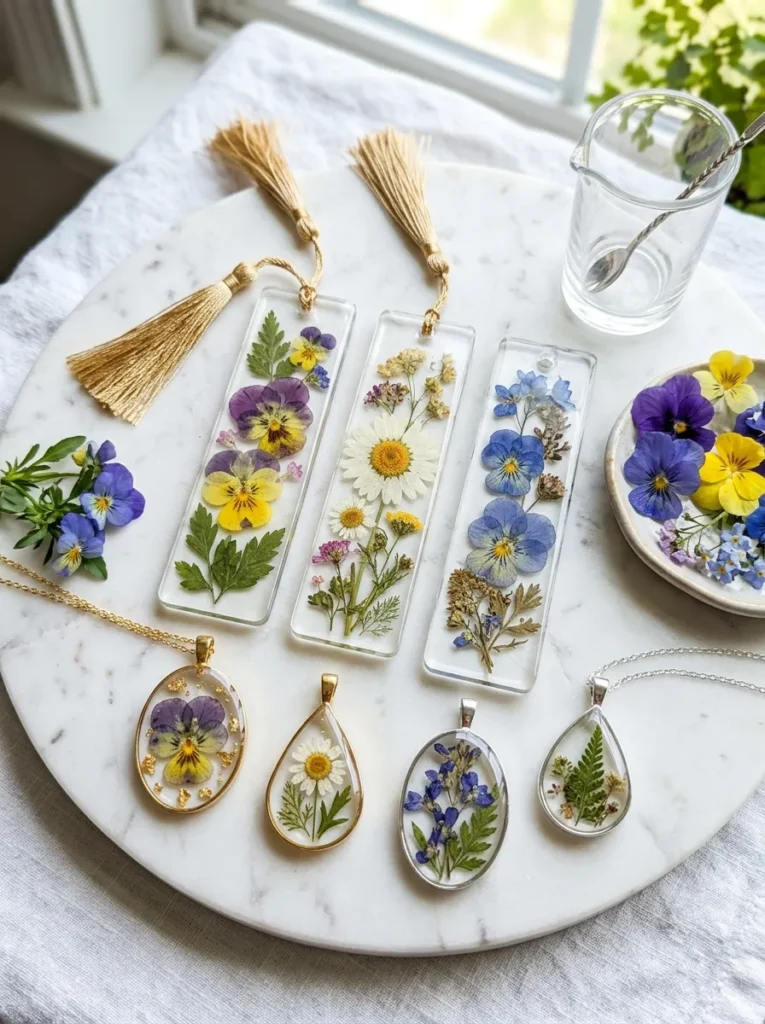
Vibe: Delicate and botanical — small objects that feel like preserved moments from a summer garden.
Why it works: Selling Craft Pressed flower resin bookmarks and pendants occupy a unique position in the handmade market because they preserve living botanical material in a permanent, wearable or functional form — an inherently poetic product concept that buyers respond to emotionally rather than purely practically. The resin encapsulation process preserves the color and form of pressed flowers with a fidelity that no other Selling craft technique matches, producing pieces that look as though the flower was pressed yesterday regardless of when the piece was made. Material cost per bookmark (resin, pressed flowers, bookmark hardware) runs $1.50–3.50; retail price $12–22. Pendant material cost is $2–5; retail price $20–40 with a gold-filled bail and chain. The pressed flower sourcing is the creative differentiator that allows makers to develop a distinctive aesthetic — unusual botanicals (pressed ferns, skeletal leaves, wild grasses) produce more distinctive results than common garden flowers.
How to get it: Use UV resin (Padico or Creations from Eden brands) rather than two-part epoxy resin for bookmarks and small pendants — UV resin cures in 60–90 seconds under a UV lamp rather than 24–48 hours, which allows same-session production of multiple pieces. Press flowers in a flower press or heavy book for minimum 2 weeks before using in resin — inadequately dried flowers release moisture into the resin that causes clouding and yellowing over time. Apply resin in two thin layers rather than one thick pour to prevent air bubble entrapment around the flower surfaces.
Shop the Look
| Product |
|---|
| UV resin clear hard type |
| UV lamp 36W nail curing |
| Flower press wooden set |
| Bookmark resin mold rectangle |
| Gold pendant bail finding set |
10. Hand-Poured Beeswax Pillar Candles with Herb Embeds
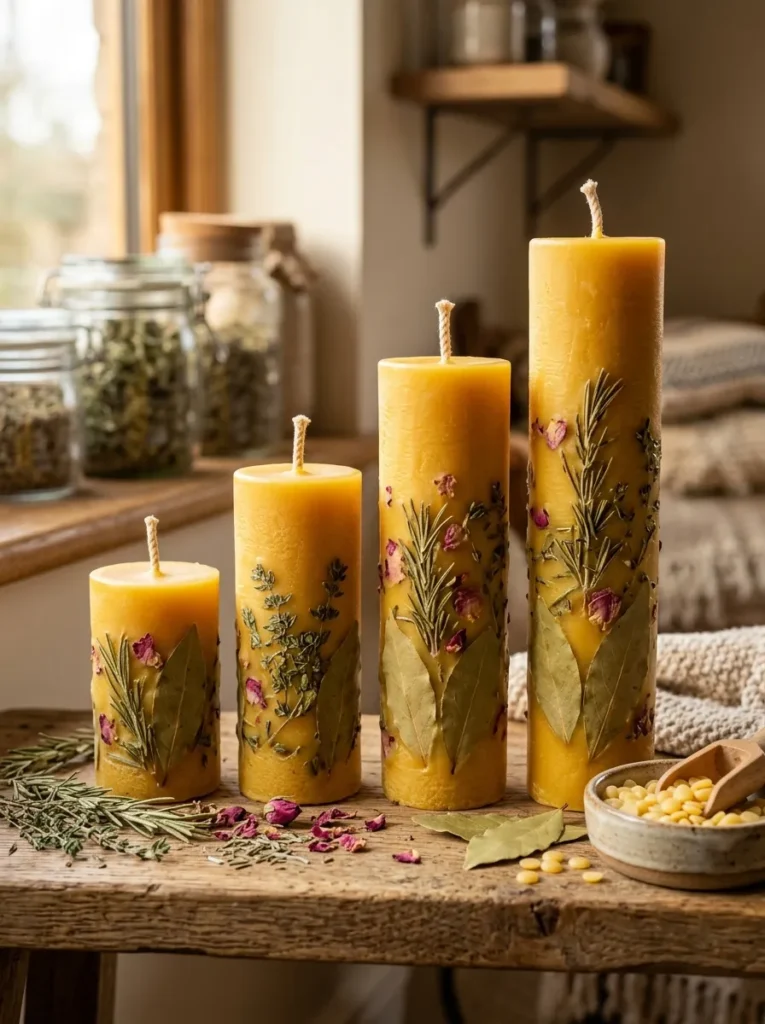
Vibe: Warm and herbal — the candle collection that smells like a kitchen garden and looks like a still life painting.
Why it works: Selling Craft Hand-poured beeswax pillar candles with herb embeds are positioned at the premium tier of the handmade candle market because beeswax carries a natural honey scent that synthetic fragrance cannot replicate, a natural golden color that is visually distinctive from white soy or paraffin candles, and a slower burn rate (beeswax burns 2–3 times longer than paraffin by weight) that buyers understand as representing genuine value. The herb embed technique — pressing dried rosemary, thyme, bay leaf, or rose against the outer surface of the candle while the wax is still warm from the mold — produces pieces that read as genuinely artisanal and hand Selling craft in a way that a plain poured candle does not. Material cost per pillar (beeswax, wick, dried herbs) runs $5–12 depending on candle height; retail price $22–55 for the size range, producing a 4–8x material-to-retail ratio.
How to get it: Selling Craft Use cosmetic-grade filtered beeswax pellets rather than block beeswax for pillar candles — pellets melt evenly in a double boiler without hot spots that can cause air pockets in the finished pillar. Pour at 70°C into a pre-warmed pillar mold (cold molds cause the wax to contract rapidly and pull away from the mold walls before full setting, producing surface pitting). Allow to cool at room temperature rather than refrigerating — rapid cooling causes cracking in beeswax pillars.
Shop the Look
| Product |
|---|
| Beeswax pellets cosmetic grade 500g |
| Pillar candle mold set varied heights |
| Square braid cotton wick 3×3 |
| Dried rosemary bunch Selling craft |
| Dried bay leaf bunch Selling craft |
11. Lino-Printed Wrapping Paper and Gift Tags
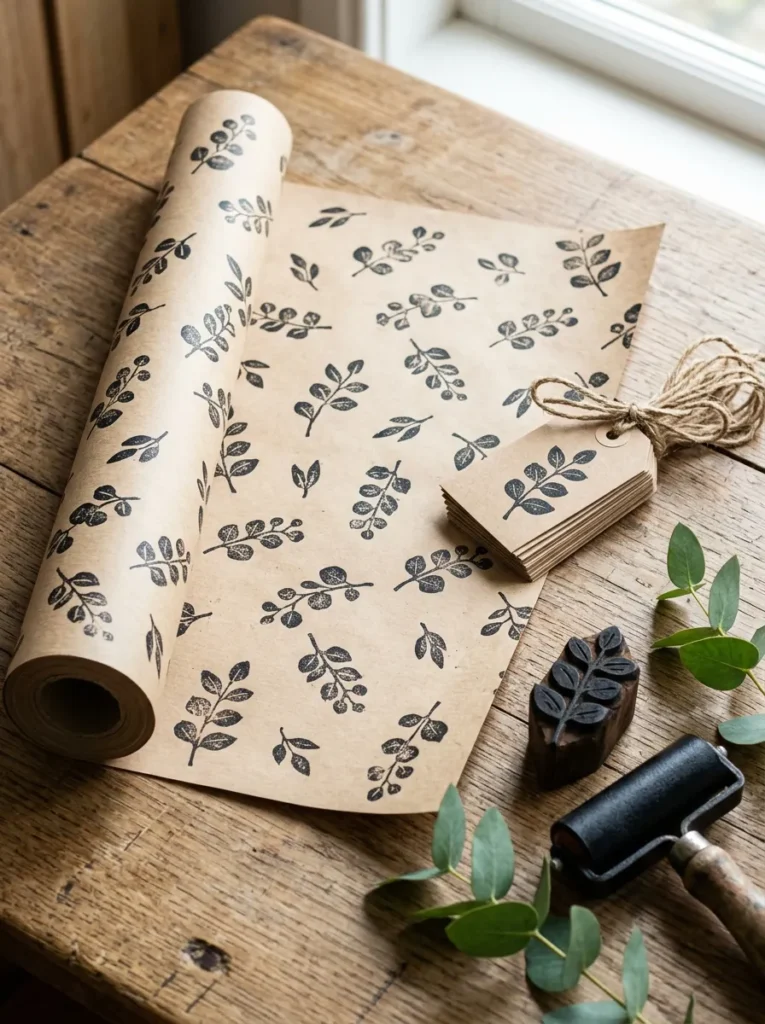
Vibe: Natural and handcrafted — wrapping paper that is more beautiful than the gift inside it.
Why it works: Selling Craft Hand lino-printed wrapping paper and gift tags occupy an underserved niche in the handmade gift market — most buyers purchase mass-produced wrapping paper without considering that a handmade alternative exists, but when presented with lino-printed kraft paper at a farmers market or in an Etsy shop, the response is consistently strong because the product fulfills a genuine desire for beautiful, considered gift presentation that commercial wrapping paper does not serve. The repeat botanical block print in black on kraft paper is the strongest commercial design because it is gender-neutral, occasion-neutral, and coordinates with any ribbon or gift tag color. Material cost per sheet of A1 wrapping paper (kraft paper + ink) is $0.30–0.60; retail price $5–10 per sheet or $18–28 for a set of four sheets with tags — a material-to-retail ratio of 10–20x.
How to get it: Selling Craft Carve the lino block design in reverse — all lino printing mirrors the carved image, so text and asymmetric designs must be carved as their mirror image. Apply ink with a brayer (small rubber roller) rather than a brush for consistent, even ink distribution across the block surface. Print on a firm, flat surface with the paper secured by tape at the corners — paper movement during printing causes double-image ghosting that makes repeat patterns read as mistakes rather than character.
Quick Win: A single carved lino block design can be used to print unlimited quantities of wrapping paper, gift tags, tote bags, tissue paper, and card stock — the upfront carving investment of 1–2 hours produces a reusable tool that generates revenue across multiple product categories from a single design asset.
Shop the Look
| Product |
|---|
| Speedball Speedy-Carve lino block large |
| Lino block carving tool set |
| Speedball block printing ink black |
| Brayer rubber roller 10cm |
| Kraft paper roll large |
12. Dried Flower and Botanical Wreaths
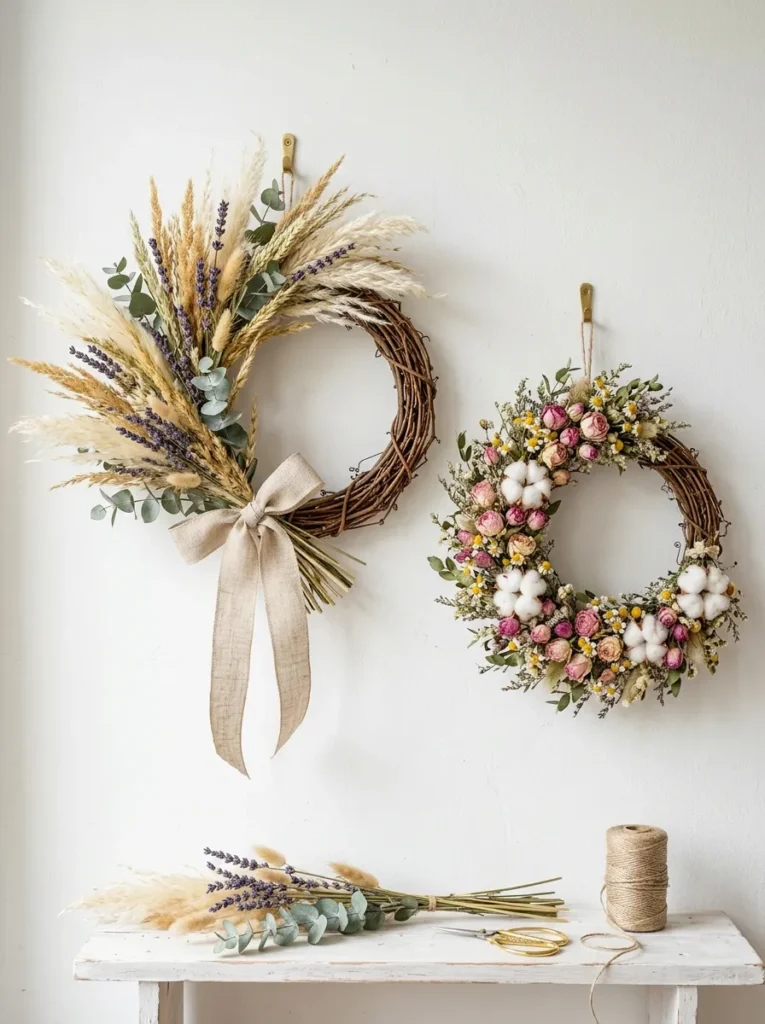
Vibe: Natural and warm — wreaths that look like they were gathered from the most beautiful field in the country.
Why it works: Selling Craft Dried botanical wreaths are perennially among the top-selling products at Selling craft markets and on Etsy because they satisfy the home decorator’s desire for natural, organic texture in wall decor — a need that manufactured alternatives cannot fulfill because the variety, imperfection, and layered depth of real dried botanical material is irreplicable at scale. The commercial advantage of dried over fresh botanical wreaths is significant: dried wreaths last 1–3 years without maintenance (versus 2–3 weeks for fresh), can be shipped without the fragility and refrigeration requirements of fresh florals, and can be produced in advance and held as inventory. A full-size dried wreath (45cm diameter) retails for $55–120 at markets and $65–150 on Etsy; material cost (grapevine base, dried botanicals, ribbon) runs $15–35 depending on botanical choice, producing a 3–5x material-to-retail ratio.
How to get it: Build the wreath in sections rather than placing individual stems — wire small bundles of 5–8 stems together before attaching to the grapevine base, which creates the layered density that distinguishes a professionally made wreath from a sparse amateur one. Layer from the outside edge inward: large structural botanicals (pampas, eucalyptus) first, medium accent botanicals (dried roses, lavender, chamomile) second, small detail elements (cotton stems, seed heads, dried berries) third. The layering sequence is the technique that creates the visual depth and complexity that buyers respond to.
Shop the Look
| Product |
|---|
| Grapevine wreath base 45cm |
| Dried pampas grass bunch |
| Dried lavender bunch wholesale |
| Dried rosebuds bunch Selling craft |
| Natural linen ribbon wide roll |
13. Hand-Lettered Greeting Cards with Watercolor Illustration
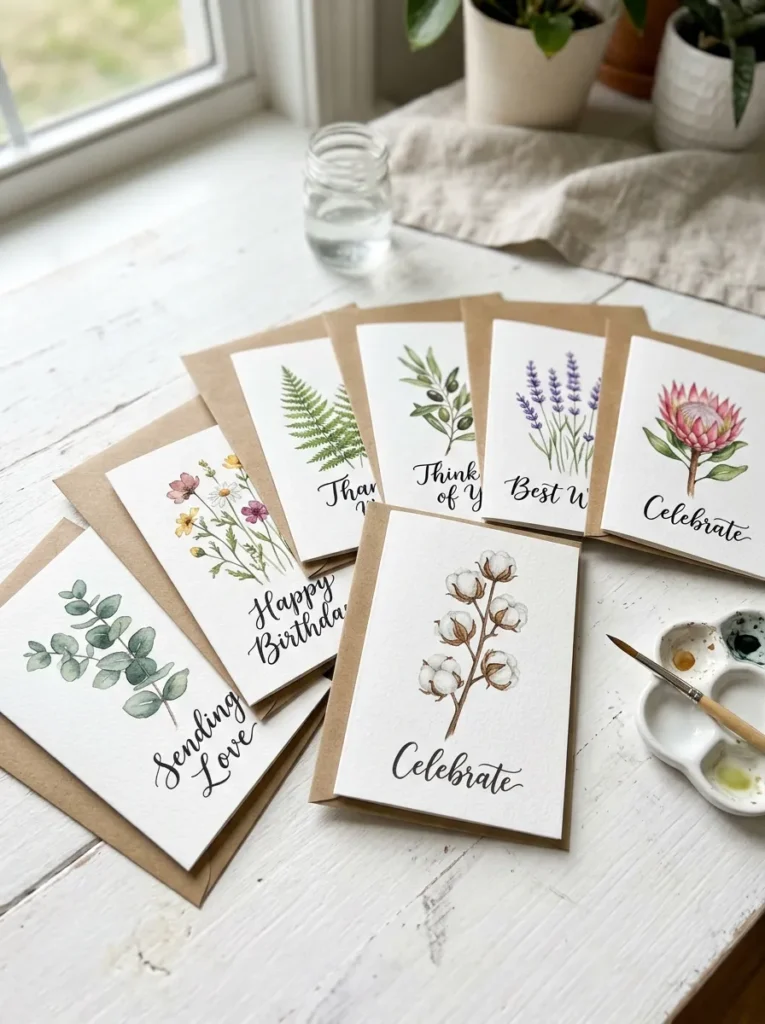
Vibe: Delicate and warm — the greeting card that gets kept rather than recycled.
Why it works: Selling Craft Hand-lettered greeting cards are the most accessible entry point in the handmade stationery market and one of the most consistent best-sellers across all Selling craft market formats — physical and digital. The commercial logic is straightforward: greeting cards are purchased at a rate of approximately 6.5 billion per year in the United States alone (Greeting Card Association, 2023), a market of that scale contains a significant premium segment of buyers who seek handmade alternatives to commercial cards, and the price differential is marginal from the buyer’s perspective — a handmade card at $6–12 versus a commercial card at $5–8 is a small absolute premium for a product perceived as significantly more personal and considered. The watercolor botanical illustration category is the strongest visual choice because it allows makers to develop and refine a distinctive illustration style that becomes a brand signature, and because the botanical subject matter has demonstrated broad, enduring market appeal across all card-buying occasions.
How to get it: Print on 300gsm cold-press watercolor card stock cut to A6 (105mm × 148mm) — the A6 size fits standard C6 envelopes, eliminating the cost of custom envelope sourcing. Watercolor the botanical illustration first, allow to dry completely, then letter the sentiment below using a Tombow Fudenosuke brush pen for the hand-lettered quality that buyers specifically seek. Scan the finished card at 600 DPI and offer as a digital download alongside the physical product — one original design generates revenue as both a physical card and a digital file that buyers print themselves.
Quick Win: Selling Craft Scanning a finished hand-lettered watercolor card at 600 DPI and listing it as a digital download on Etsy at $3–5 generates passive revenue from every sale without materials, packaging, or shipping cost — a single popular design can generate $200–800 in digital download revenue per year from the same original artwork that produces physical card sales.
Shop the Look
| Product |
|---|
| 300gsm cold press watercolor card stock |
| Tombow Fudenosuke brush pen black |
| Watercolor paint set professional |
| Fine detail watercolor brush set |
| Kraft paper envelope C6 set |
How to Start Your Best-Selling Craft Business
Your single first move is to make five samples of one product — not one, not ten, but exactly five — and photograph all five together in a single flat-lay product photograph before listing anything for sale. The five-piece quantity is the minimum that allows a product photograph to read as a product range rather than a single item, which is the visual signal that tells potential buyers they are looking at a maker’s considered product line rather than a one-off. Photograph on a white or marble surface under natural window light at midday, using your phone’s camera in portrait mode — the depth-of-field blur effect of portrait mode produces a product image quality that approaches professional photography without specialist equipment. List that single photograph on your Etsy shop, at your market table, and on your social media profile before making more inventory. The market’s response to that first photograph tells you whether to make more of this product or to move to the next idea on your list.
The most common mistake new Selling craft sellers make is pricing at cost-plus rather than at value. Cost-plus pricing — calculating material cost, adding a markup, and arriving at a retail price — consistently underprices handmade goods because it ignores the three value components that buyers are actually paying for: the maker’s time, the maker’s skill, and the intangible premium of handmade versus manufactured. The correct pricing formula for handmade products is: material cost × 3–5 (the wholesale multiple) × 2 (the retail multiple) = retail price. A trinket dish with $1.50 in material cost should retail at $9–15 (wholesale) or $18–30 (retail), not at $4–6 (cost-plus). Underpricing signals low quality to buyers rather than value — a handmade product priced below the equivalent manufactured alternative creates suspicion rather than interest.
Three specific actions under $50 that create immediate Selling craft business momentum: (1) A set of five white card earring display boards ($3–6 from a jewelry wholesale supplier) or a marble-effect photography backdrop board ($15–25 from a photography supply store) immediately elevates the quality of every product photograph you take — better photography is the single highest-return investment in an Etsy shop’s conversion rate. (2) A kraft paper swing tag set with a hand-stamped brand mark ($12–20 for 100 tags plus a rubber stamp) creates a consistent brand identity across every product you sell without the cost of printed packaging, and the hand-stamped quality reinforces the handmade character of the products it tags. (3) A single one-hour listing session on Etsy ($0.20 per listing) for your first five products — with photographed, titled, priced, and described listings — gets your products in front of 95 million active buyers immediately, which no amount of product-making without listing achieves.
Realistically, a Selling craft business generating its first sales — three to five Etsy orders per week — takes 4–8 weeks from first product to first sale when the maker commits to consistent listing (adding two to three new listings per week), consistent social media presence (posting one process video per week showing the making), and consistent product development (making one new product variation per fortnight to expand the range). A craft business generating $500–1,500 per month in revenue — achievable within 6–12 months for a maker who treats it as a part-time business rather than a hobby — requires approximately 15–25 hours of combined making, photographing, listing, packaging, and shipping time per week. Most successful craft businesses identify their highest-margin, fastest-producing product within the first three months and concentrate 70% of their production on that product while using the remaining 30% to develop new products and test new markets.
Frequently Asked Questions About Best-Selling Craft Ideas
What handmade crafts sell best on Etsy in 2024 and 2025?
The consistently highest-selling handmade categories on Etsy across 2023–2025 are jewelry (polymer clay earrings are the fastest-growing subcategory), home decor (macrame, dried botanical wreaths, and candles), stationery (hand-lettered greeting cards and printed goods), and sustainable lifestyle products (beeswax wraps, natural dye textiles, and reusable pouches). Within these categories, the specific products that convert most reliably are those with strong gift-giving positioning — items that buyers purchase for others rather than themselves — because gifting occasions (birthdays, Christmas, Mother’s Day, weddings) create a reliable purchasing calendar that makers can plan production around. The Etsy algorithm also favors products with multiple variations (different colors, sizes, or designs within a single listing), which rewards makers who develop a coherent range around a single product type rather than listing isolated individual pieces.
What craft products have the best profit margins for small makers?
The five highest-margin Selling craft products by material-to-retail ratio are: hand-stamped linen tote bags (8–15x), polymer clay earrings (20–40x), lino-printed wrapping paper and cards (10–20x), pressed flower resin pieces (6–12x), and air-dry clay trinket dishes (8–15x). The highest-margin products share two characteristics: low material cost per unit and high perceived value through visible maker skill. The products with the lowest margins — beeswax candles (3–6x), dried botanical wreaths (3–5x), and hand-painted ceramics (4–8x) — are lower-margin not because they are commercially unviable but because their material costs are higher relative to their achievable retail prices. All products in this list are commercially viable at craft market and Etsy price points; the margin difference determines how many units must be sold to achieve a given revenue target.
How much money do I need to start a Selling craft business?
The minimum viable Selling craft business startup cost for any product in this list is $50–150 in materials and tools for the first production run, plus $0.20 per Etsy listing for the initial shop setup (a five-listing shop costs $1.00 to activate). The $50–150 range covers: a block of clay or a roll of macrame cord or a kilogram of soy wax, the basic tools needed for the chosen craft, and packaging materials for the first 10–15 units. The highest startup cost items — a pasta machine for polymer clay ($25–60), a UV lamp for resin work ($20–40), or a flower press for pressed botanicals ($15–30) — are one-time tool investments that do not recur with production scale. Most successful craft businesses generate their first $200–500 in revenue before reinvesting in expanded tool sets or material quantities, which means the initial investment is recoverable within the first month of active selling for most of the products in this list.
Do I need social media to sell handmade Selling crafts successfully?
Social media — specifically Instagram Reels and TikTok — is the fastest customer acquisition channel available to handmade sellers, but it is not the only viable one. Etsy’s internal search algorithm, SEO-optimized listings, and Pinterest product pins collectively generate consistent organic traffic for makers who invest in quality photography and keyword-optimized titles and descriptions, without requiring social media presence. Selling Craft markets and local stockists (gift shops, florists, homeware stores, and cafe retail displays) provide direct sales channels that require no digital presence at all and often generate higher per-transaction values than online sales because buyers can physically handle the products. The most successful small craft businesses typically combine two channels: Etsy for online reach and one physical channel (market or stockist) for local community building, and add social media only when the two primary channels are established and generating consistent revenue.
What is the best way to photograph handmade Selling crafts for Etsy and social media?
The three non-negotiable photography elements for handmade Selling craft product images are: natural window light (north-facing window at midday in the southern hemisphere, south-facing in the northern hemisphere, with a white reflector card opposite to fill shadows), a clean, uncluttered background (white card, marble-effect board, or warm timber surface), and a consistent composition style across all listings in a shop (all flat-lay overhead, or all eye-level, or all styled vignettes — never mixed, which reads as inconsistent brand identity). Phone cameras in portrait mode now produce image quality sufficient for Etsy listings and social media without any additional equipment. The single most common photography mistake that reduces conversion rates is photographing products on a cluttered background — a background with distracting elements reduces the buyer’s focus on the product and signals an amateur presentation that undermines confidence in the product’s quality regardless of how good the product actually is.
Ready to Build Your Best-Selling Craft Business?
These 13 ideas span the full range of what a handmade Selling craft business can be built from — from air-dry clay trinket dishes and polymer clay earrings at the accessible entry end, to hand-poured beeswax pillar candles, natural dye linen pouches, and dried botanical wreaths at the more developed craft end — so whether you are picking up a craft tool for the first time or looking to commercialize a skill you have been developing for years, there is a genuinely buildable product line here for your current skill level, your available time, and your target market. The business builds fastest when it starts narrow: one product, made five times, photographed once, listed immediately, then repeated and refined based on what the market actually responds to rather than what you imagined it would. Today’s specific action: choose the one product from this list that you could make a sample of this weekend with materials you either already own or can purchase for under $30, make that sample before Sunday evening, and photograph it against a white background in natural window light — that photograph is your first listing, and your first listing is your first step from maker to seller. When the orders start arriving and you are packing your first handmade products for strangers who found them through a photograph you took on your kitchen table, you will have built the thing that every creative maker deserves: a business that pays for the making. Save the products that matched your existing skills and your available weekly time — those are the ones that will be in your shop before the end of the month.