The word “complete” gets used carelessly in discussions of AI game creation. A complete game is not a tech demo, a playable prototype, or a visual mockup — it is a game that a player with no context can open, understand, play, succeed or fail at, and share with someone else. It has working game logic, functional controls, visual assets, audio, a win or failure condition, and a way to restart. All of these elements are integrated and working together.
When an AI game agent like Boo on Combos builds a complete game, it is producing all of these elements and assembling them into a coherent, deployable result. This is not a small thing. The integration of game logic, assets, and interaction design into a working whole is the most technically demanding stage of conventional game development. The agent handles it autonomously, which is why the no-code claim is accurate rather than misleading.
The Architecture an Agent Works Through: Layer by Layer
Understanding how an AI game agent builds a complete game helps creators direct the process more effectively. The construction happens in layers, each of which depends on the decisions made in the layer before it.
The agent runs through all layers in sequence, with the creator’s input shaping the first layer most directly and the agent making increasingly autonomous decisions in the subsequent ones.
Watching Boo Build a Complete Game on Combos
Here is exactly what happens when you hand a game concept to Boo on Combos and let the vibe coding game agent build it.
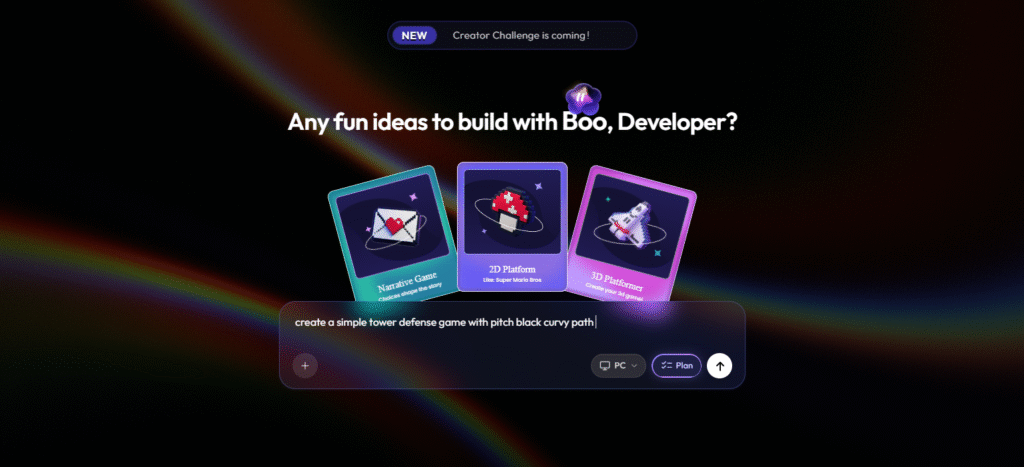
Step 1 — Describe the Full Concept: Visit combos.fun and describe a full game concept to Boo — include the genre, the setting, and the player’s core goal. These three elements are enough for Boo to begin structuring a complete design.
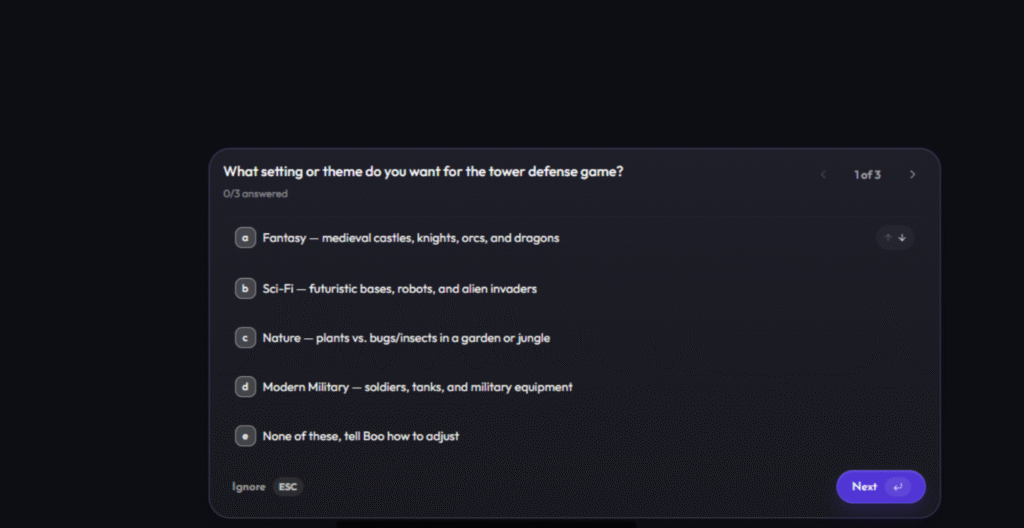
Step 2 — Watch Boo Plan: Watch Boo plan the structure autonomously — it handles game logic architecture, character behaviour rules, and environment design parameters without requiring input at each decision point. The plan arrives as a GDD for your review.
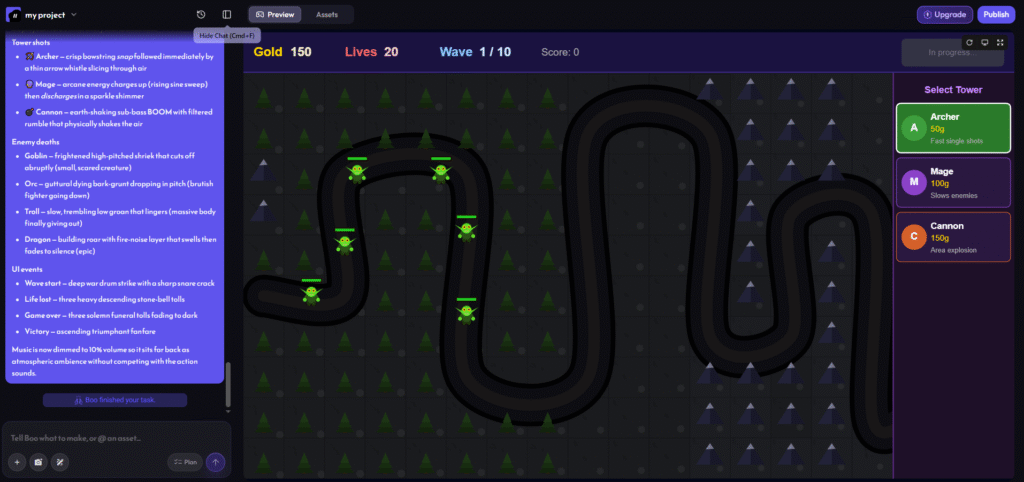
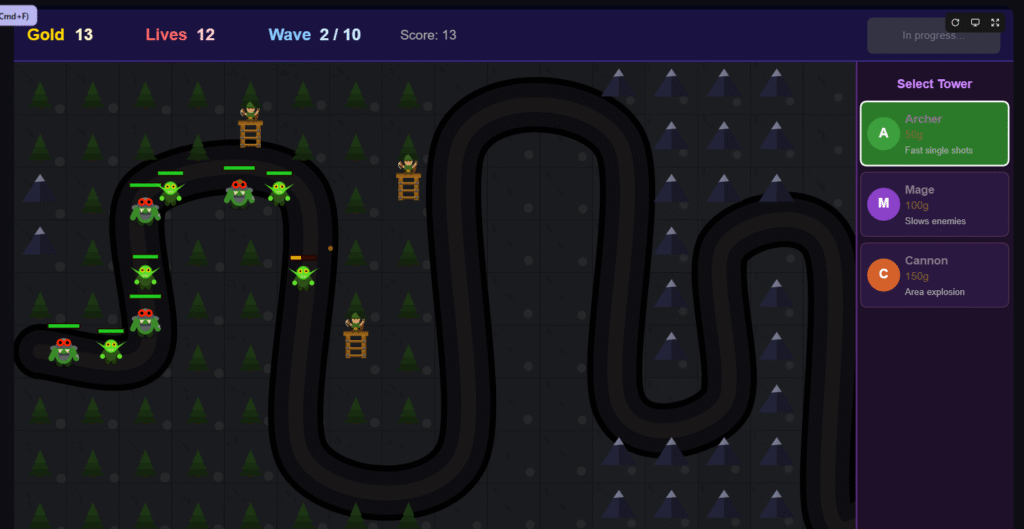
Step 3 — Boo Builds the Prototype: Let Boo generate all visual assets and integrate them into a fully working prototype with no manual coding at any stage. The result is a complete, playable game — not a skeleton requiring further assembly.
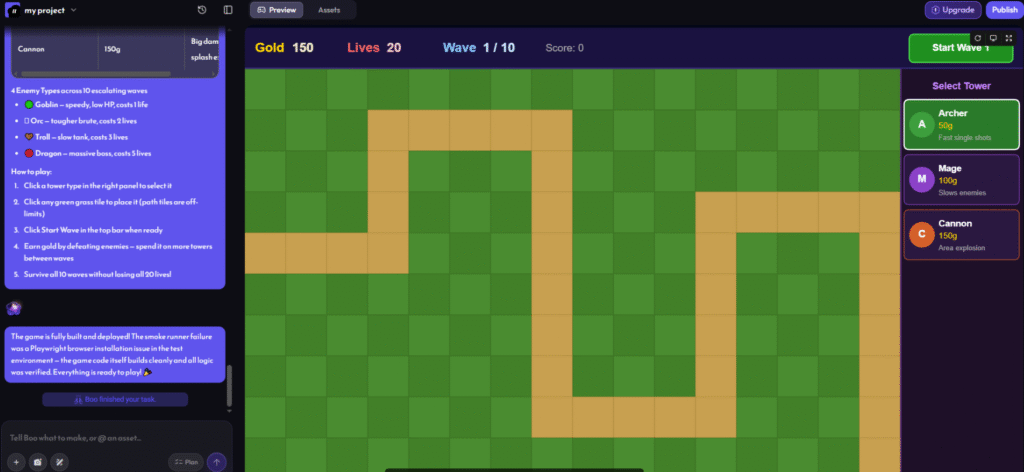
Step 4 — Test and Direct in Natural Language: Test the complete build and use natural language to fix anything that is not working — “the enemies are moving too fast for the early levels” or “the score counter should appear from the first moment.” Each adjustment is applied within the existing game structure without breaking anything else.
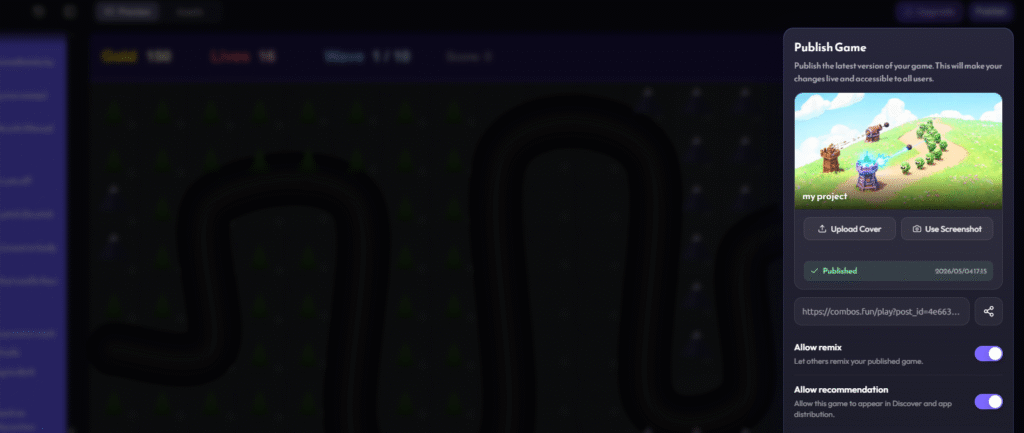
Step 5 — One-Click Publish: Publish with one click. The game is hosted immediately, and the shareable link is live. Players can access it on any device without downloading anything.
When the Agent Makes Decisions and When It Asks You
One of the qualities that distinguishes a good AI game agent from a basic generator is its understanding of when to proceed autonomously and when to pause and check with the creator. Bad agents make autonomous decisions about things the creator would have wanted input on. Bad agents also interrupt constantly to ask about things the creator would have been happy to leave to the agent’s judgment.
Boo’s approach to Combos is to front-load the clarification into the GDD stage. The agent asks the questions that matter — the ones where the creator’s intent could reasonably go in very different directions — before building anything. Once the GDD is approved, Boo proceeds autonomously through the generation and integration layers, surfacing only when something in the build does not align with the approved design. This approach minimises interruption during the build while ensuring the creator’s intent shapes the foundational decisions.
What This Means for Creators Who Were Never Going to Learn Code
For the large population of creators who have always wanted to make games but were never going to invest the time required to learn programming, the AI game agent represents something qualitatively different from a simplification of the existing process. It is an entirely new path that bypasses the technical prerequisite entirely.
The skills that matter when working with an AI game agent are evaluative and creative rather than technical: the ability to describe intent clearly, to recognise when an output matches that intent, and to communicate specifically what needs to change when it does not. These are skills that creative people already have in the context of their existing practice. A writer who can evaluate whether a sentence achieves its effect can evaluate whether a game achieves its intended feel. A designer who can identify when a visual is not working can identify when a game’s aesthetic is off. The agent translates those existing creative skills into game creation capacity.
Conclusion
An AI game agent that builds complete games without code is not a promise that has been partially fulfilled — it is a reality that is changing who makes games and what those games feel like. Boo on Combos builds complete, deployable, shareable games from natural language descriptions, handles the full game-creation stack autonomously through the build phase, and iterates in response to natural-language direction until the result matches the creator’s intent. The technical barrier to game creation has been removed. What remains is the creative work that no agent can do on your behalf — and that is exactly where your attention should be.